
Marx Was Right. His Own Disciples Proved It
The article shows how, after the regime's fall, roughly 1.7 million members of the Czechoslovak Communist Party (KSČ) confirmed Marx's own thesis that social being determines consciousness — when the economic base shifted from planned to market, former Marxists transformed within months into ardent champions of the free market, epitomized by the economists of the ČSAV Forecasting Institute (Komárek, Klaus, Zeman). Drawing on Marx, Hoffer, and Žižek, the author argues that this "turning of coats" was not a dramatic conversion but merely a change of ideological costume over the same cynical subject, and recalls a June 1989 survey according to which only 46% of the party's members would have joined again.

The Invisible Censor: How We Learned to Silence Ourselves
The article follows one person's life from a curious high-school student to a resigned adult, using it to show how market democracy replaced external totalitarian censorship with a more elegant internal self-censorship — a person installs their own censor and mistakes it for their own judgment. Alongside Orwell and Huxley, the author proposes a third model of control, one in which citizens police their own thinking, and backs it with research (FIRE, Pew, Index on Censorship) as well as the ideas of Bernays, Ellul, Chomsky, Zuboff, and Bělohradský. He places special emphasis on the Central European experience, where the shift from party directives to the ownership pressures of oligarchs unfolded within a single generation, and concludes that the market reliably silences precisely those problems that outlast changes of government.

The Missing Social Demand
The article shows why a text that is truthful, verified, and equally critical of all political camps has no chance of succeeding in the Czech media environment — not because of censorship, but because of a missing social demand, audience, and editorial outlet to spread it. The author analyzes how both media owners and the audience itself systematically filter out content that strengthens no side, and how even media literacy has transformed from a tool of emancipation into a more sophisticated filter for sorting information according to one's own worldview. It culminates in the thesis that whereas under totalitarianism the freedom to write is missing, in a democracy what is missing is the demand to read.

The Highest Form of Democracy: Populism, Idiocracy, or Something Far Worse?
The article examines the limits of democracy through the lens of political philosophy, social choice theory, and empirical data — from Brennan's epistocracy through Caplan's rational irrationality of voters to Arrow's impossibility theorem. It analyzes populism (Müller, Mudde), refutes the biological scenario of idiocracy using the Flynn effect, and offers deliberative democracy (the Irish citizens' assembly, Fishkin's deliberative polls) as a practical path toward improving democratic decision-making.

Barbados, Instagram and the Pond Round the Corner: Why We're So Desperate to Get to the Sea
The article examines why people are so desperate to get to the sea for their holidays, analysing the phenomenon through the lenses of neuroscience, evolutionary psychology, the sociology of class, and marketing. It shows that the travel industry does not manufacture happiness but rather a sense of its absence, that the anticipation of a holiday brings more happiness than the holiday itself, and that the scientifically documented benefits of contact with water (blue space) can be obtained even at a pond in the Vysočina highlands, without any need to fly to Barbados.

Three Paths from a Single Point: Why Girls Turn Pain Inward and Boys Turn It Outward
The article presents a synthesis of findings from neuroscience, criminology, and terrorism research, showing that self-harm, addiction, and radicalization share a common psychological mechanism — a response to adverse childhood experiences and the loss of personal significance. Gender does not determine the intensity of the pain, but rather the culturally conditioned channel through which it is expressed: girls turn pain inward (self-harm, depression), boys turn it outward (aggression, extremism). Kruglanski's 3N model (needs–narratives–networks) explains why these phenomena are interchangeable and points to the possibility of unified prevention instead of the current fragmented approach.

Why People Pay for Justice: Science Reveals the Dark and Light Sides of Altruistic Punishment
The article analyzes the phenomenon of altruistic punishment — people's willingness to bear personal costs to punish norm violators even without personal benefit. It summarizes key research from behavioral economics, evolutionary biology, and neuroscience since the groundbreaking study by Fehr and Gächter (2002), including public goods game experiments, cross-cultural comparisons, and neuroimaging studies revealing the activation of the brain's reward centers during punishment.

How Fidesz Took Control of Hungary's Media: Anatomy of a Fifteen-Year Process
The article maps in detail the fifteen-year process by which the Fidesz party, under the leadership of Viktor Orbán, systematically gained control of roughly 80% of the Hungarian media market. It describes the legislative changes, the creation of a loyal regulatory authority, media acquisitions by friendly oligarchs, the emergence of the KESMA media foundation uniting hundreds of outlets, and the economic starvation of independent newsrooms through state advertising. Despite this, an ecosystem of independent online media funded by donations and subscriptions survives in Hungary.

Why Vegans Don't Feed Lions Tofu: On Money, the Steam Engine, and a New Religion Without a God
The article analyzes the vegan movement through the lens of economics, psychology, and history. It shows that moral arguments against killing animals have, on their own, never been enough to bring about change — just as with the abolition of slavery, technological and economic superiority (the steam engine) was decisive. The author argues that real change will be driven by cultivated meat and synthetic proteins, not by individual dietary conversions, and criticizes the flows of money within the animal-rights movement, which go more toward campaigns than toward technological development.

Why Fifteen Scandals Persuade Less Than One
The article explains the paradox of why many scandals strengthen rather than weaken a politician, drawing on nine psychological mechanisms – the dilution effect, cognitive overload, the conjunction fallacy, narrative transportation, and psychic numbing. It shows that the human brain processes a flood of accusations heuristically and intuitively, which erodes their persuasiveness, whereas a single concrete story with an identifiable victim persuades more effectively than fifteen factual points.

How Pork Belly Became King: The Story of the Strangest Price Reversal on Your Plate
The article analyzes the remarkable price reversal of pork belly, which has gone from historically the cheapest part of the pig to costing more than ham. Behind this structural shift lies a combination of anatomical constraints (the belly makes up only 16–19% of the carcass), the American bacon boom, Asian demand amplified by African swine fever in China, grilling culture spread through social media, and the rehabilitation of fat within keto diets. For the Czech market, which relies on imports for more than half of its pork, the era of cheap pork belly is definitively a thing of the past.

15,000 lives per quarter: how the phrase “that’s just your opinion” killed during the pandemic
The article analyzes the impact of disinformation about mRNA vaccines during the COVID-19 pandemic in the Czech Republic. It shows how the strategy “that’s just your opinion”

How Pepík in Prague Lost His Garden in the Public Interest
Through the story of a fictional Pepík Novák, the article illustrates how the interplay between Prague's Metropolitan Plan and the amendment to the Building Act (parliamentary print 67/0) can systematically favor large investors at the expense of small property owners. The amendment introduces automatic public-interest status for buildings over 10,000 m², single-instance proceedings with no right of appeal, and the option of expropriation in favor of private developers, while owners of family houses in stabilized areas remain regulatorily frozen.
A Watchdog in a Commercial Kennel
The article traces how the purpose of the media has shifted from the postwar ideal of democracy's watchdog, through the Hutchins Commission and the Four Theories of the Press, to today's crisis of journalism in the digital age. It analyzes how the advent of television advertising, stock-market ownership of newspapers, and media concentration eroded the profession's ethos, and sets the media theory of Chomsky and Herman against the current digital reality.
We're Living Longer, but Where Will We Live?
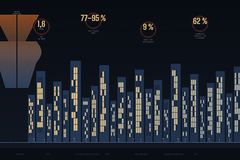
By 2050, the global population over 65 will double to 1.6 billion, with 77–95% of seniors wanting to remain in their own homes—yet the existing housing stock is not ready for it. The article compares the approaches of Norway, Japan, and other countries to barrier-free housing and analyzes economic models for financing home modifications for the aging Czech population.

The White Disease 2025: How Grandparents Became Enemies
The article confronts the widespread narrative about selfish seniors with academic studies and data. It shows that the 'grey vote' hypothesis has been refuted, that seniors are net givers of intergenerational transfers, and that their critical media literacy is in many respects better than that of younger generations. Meanwhile, the influence of disinformation on elections is an order of magnitude smaller than the influence of the narrative framing by established media.

The Nobel Prize Factory That Is Losing Its Workers
The article analyzes the Israeli phenomenon of a high number of Nobel Prizes per capita and reveals the structural conditions behind this success — immigration waves bringing in talent, top-tier institutions, and a culture of questioning authority. At the same time, it shows that this model is threatened by brain drain, underfunding of basic research, the exclusion of the Arab and ultra-Orthodox populations, and political instability after 2023. In conclusion, it compares the Israeli and Czech approaches to science and identifies which elements are transferable and which are not.

Money Doesn't Motivate? Bosses Earn 281× More and Perform No Better
The article debunks the popular myth that money doesn't motivate, confronting it with meta-analyses showing that financial incentives reliably increase the quantity of performance. At the same time, it highlights the paradox in which rank-and-file employees are told that money isn't important, while CEOs collect 281× higher compensation justified by financial motivation. Drawing on neuroscience studies and economic data, it shows that extremely high executive pay is often counterproductive and that its growth is driven more by systemic mechanisms than by any real impact on performance.

When Society Goes Blind: The Cybernetics of Democratic Stability
The article analyzes democratic stability through the lens of cybernetics and systems theory, in which negative feedback (the media, trade unions, courts, civil society) functions as a regulatory mechanism that keeps society in balance. Drawing on the work of Wiener, Ashby, Meadows, and Beer, it shows that suppressing these feedback loops — as illustrated by the examples of the USSR, Nazi Germany, and the present-day shrinking of civic space — inevitably leads to the destabilization and collapse of the system.