Barbados, Instagram and the Pond Round the Corner: Why We're So Desperate to Get to the Sea
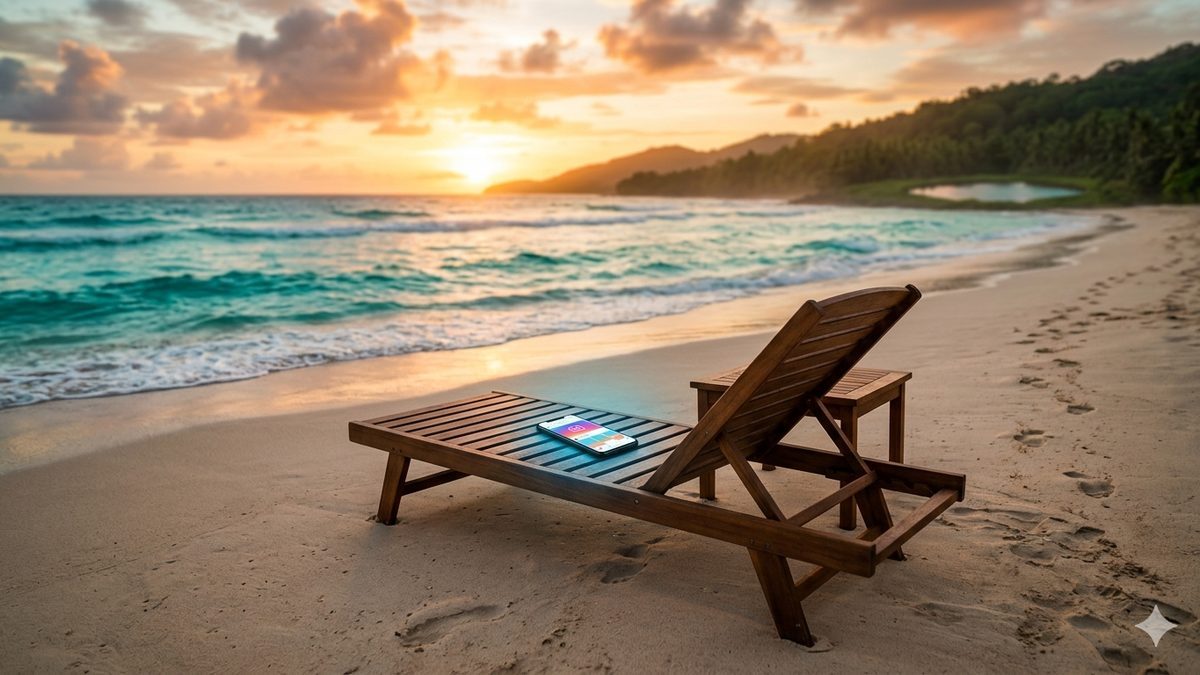
The article examines why people are so desperate to get to the sea for their holidays, analysing the phenomenon through the lenses of neuroscience, evolutionary psychology, the sociology of class, and marketing. It shows that the travel industry does not manufacture happiness but rather a sense of its absence, that the anticipation of a holiday brings more happiness than the holiday itself, and that the scientifically documented benefits of contact with water (blue space) can be obtained even at a pond in the Vysočina highlands, without any need to fly to Barbados.
In 2002, the Swiss-British philosopher Alain de Botton described his trip to Barbados in his book The Art of Travel. The travel agency's brochure promised a turquoise sea, white sand, and coconut palms in the evening light. The reality involved long airport queues, bad weather, disappointment with the hotel, and a quarrel with his girlfriend. De Botton realized something most holidaymakers suspect but refuse to admit: lying on the beach was the same person, with the same problems, as in London. Only with more expensive transport.
Two decades later, the travel agency brochure is dead. Instagram has replaced it. The mechanism remains identical — it has only accelerated and intensified. According to a 2025 study published in the International Journal of Research and Innovation in Applied Science, 74% of respondents choose their destination based on social media content. Instagram dominates with 50%, YouTube follows with 26%. And 38% of travelers admit they spent money they did not have after watching other people's trips on TikTok and Instagram (TravelPerk). De Botton's brochure at least stayed on the shelf and did not follow you into bed.
Blaise Pascal put it even more sharply — three hundred and fifty years earlier: "All of humanity's problems stem from man's inability to sit quietly in a room alone."
Is it true? Or is the longing for the sea a legitimate biological need that Pascal, a hardened Jansenist, simply refused to acknowledge? The answer is surprisingly complicated — and it requires a journey through neuroscience, evolutionary psychology, the sociology of class, marketing budgets, and finally also through the ponds of the Bohemian-Moravian Highlands.
Before we turn to the science, it is useful to understand the scale of the economic pressure bearing on our holiday decisions. The four largest online travel agencies together spent 17.8 billion dollars on marketing in 2024: Booking Holdings 7.3 billion (31% of revenue), Expedia Group 6.8 billion (approximately 50% of revenue), Airbnb 2.1 billion, and Trip.com 1.6 billion. The global travel advertising market reached a value of 10.1 billion dollars, with a forecast of 20.5 billion by 2032.
Behind these budgets stand sophisticated psychological techniques. Booking.com prominently displays messages such as "5 people booked this hotel in the last hour" and "Only 1 room left" — the Hungarian Competition Authority (GVH) fined Booking.com approximately 7 million euros in 2020 for misleading urgency messages. Countdown clocks on last-minute deals push decision-making through the heuristic System 1 instead of the deliberative System 2. According to a survey by Expedia, 67% of travelers admitted they had booked a trip under the influence of FOMO (fear of missing out).
In 2024, tourism contributed 10.9 trillion dollars to world GDP — 10% of global GDP — and employed 357 million people, one in every ten jobs on the planet (WTTC).
But marketing is only one engine. The other — and perhaps stronger — is social pressure, which we often fail to recognize because we generate it ourselves.
Together they create something we might call the manufactured scarcity of happiness. The travel industry does not manufacture happiness. It manufactures a sense of a lack of happiness, which it then "solves" for money. It sells the solution to a problem it created itself. The genuine need — rest, contact with nature, psychological distance from routine — exists. But its specific form (a charter flight, an all-inclusive resort, a turquoise lagoon) is a construct: a product that arises at almost no additional cost compared to the natural alternative, yet is sold for multiples of its price. The added value exists primarily in the buyer's perception — and the industry actively builds that perception.
Thorstein Veblen, in his Theory of the Leisure Class (1899), introduced two concepts that still frame the academic debate on status consumption today: conspicuous consumption and conspicuous leisure. Among the manifestations of conspicuous leisure he explicitly included long holidays in exotic places and bringing back souvenirs. His key observation sounds timeless: it is not enough merely to possess wealth — it must be put on display.
Correia, Kozak, and Reis (2016, Journal of Travel Research) empirically confirmed this framework: tourist decisions are strongly moderated by status motivations. At the same time, they revealed a paradox: the educated elite rejects traditional status symbols and prefers subtle signals visible only to its own reference group — exclusivity, privacy, unique experiences instead of ostentation. Status is not lost; it merely mutates.
The Dutch researchers Bronner and de Hoog (2018), in a large survey of holidaymakers, found that demonstrating wealth plays a marginal role in tourist choices. Statistically significant, on the contrary, is identity demonstration — having unique experiences, showing who I am, visiting trendy locations. Most respondents believed that the choice of a summer holiday "says a lot about what kind of person someone is." Showing wealth has become a tool for showing identity.
While Veblen explains why people spend on visible holidays, Pierre Bourdieu in La Distinction (1979) explains why some people ostentatiously do not spend — and yet thereby signal an even higher status. Ahmad (2014, Journal of Hospitality & Tourism Research) directly applied Bourdieu's analytical apparatus to tourist behavior and identified three categories: "tourists" consuming mass tourism, "travelers" seeking unusual experiences and intellectualizing travel, and "virtuosos" consuming luxury with natural ease.
The distinction "tourist vs. traveler" is not an innocent linguistic preference. Ian Munt (1994, Theory, Culture & Society) argued that new forms of tourism — ecotourism, cultural tourism, adventure tourism — are driven by the new middle classes and serve as a strategy of class legitimization. In the accompanying text "Eco-tourism or Ego-tourism?" he then claimed that alternative tourism is more often about ego and distinction than about ecological concern.
John Urry, in his influential work The Tourist Gaze (1990, 3rd ed. with Larsen 2011), developed the Foucauldian concept of the "tourist gaze" — systematic, socially constructed ways of seeing that determine what tourists look at and how they interpret it.
Special attention is warranted by the concept of cosmopolitan capital (Weenink, 2008, Sociology): competencies that serve within a transnational reality. Igarashi and Saito (2014) showed how educational systems institutionalize cosmopolitanism as cultural capital whose accessibility is structurally unequal — cosmopolitans claim a dominant position by framing intercultural knowledge as valuable and delegitimizing other cultural resources by labeling them "local" or "provincial."
Whoever goes to the Highlands is provincial. Whoever goes to Bali is cosmopolitan. Bourdieu's apparatus explains why — and why this is simultaneously true and a lie.
Evolutionary psychology offers an even more fundamental framework. Zahavi's handicap principle (1975) states that sexually selected traits must be costly to produce in order to function as honest signals of quality — the peacock's tail must be dysfunctionally large, otherwise everyone would have one. Sundie et al. (2011, Journal of Personality and Social Psychology), in four experiments with approximately a thousand subjects, demonstrated that conspicuous consumption functions as a sexual signaling system.
A direct application to tourism was carried out by Boley et al. (2018), who developed the Social Return Scale — a scale measuring the expected positive social feedback from travel posts on social media. On a sample of 758 American tourists they demonstrated that social return has the greatest influence on the prediction of travel within a one-year horizon.
The most provocative findings were brought by Beall et al. (2021, Journal of Sustainable Tourism): intention toward ecotourism is predicted by social return (β = 0.60) nearly three times more strongly than by environmental values (β = 0.22). Ecological tourism serves as a vehicle for conspicuous consumption — the sustainable label becomes a status signal. Even conspicuous non-consumption — a domestic holiday, a digital detox, slow travel — can send equally strong status signals (Sørensen and Hjalager, 2020, Tourist Studies). There is no escape. Every choice signals.
Social media has amplified this mechanism exponentially. According to a survey by MMGY Global (2017), 40% of travelers under 33 consider "Instagrammability" when choosing a destination. Forbes Advisor (2024) found that 48% of Americans traveled to a place specifically because they saw it on social media, and 82% of Generation Z visited a destination discovered on social media.
The academic literature has identified a self-reinforcing cycle. Hajli, Wang, and Tajvidi (2018, Annals of Tourism Research) demonstrated that browsing travel posts induces travel envy, which increases the intention to visit a destination. 44% of respondents increased their travel budget because of FOMO after viewing posts, 42% went into debt or exceeded their budget — for Generation Z it was 78% (Forbes Advisor, 2024).
Qian (2020/2025, Journal of Travel Research) analyzed over 8,000 Instagram datasets and identified a dominant pattern of "templated" photographs — tourists arrive with pre-planned shots. Siegel, Tussyadiah, and Scarles (2023) used the term e-lienation (e-alienation) for this phenomenon: technology creates a barrier between the tourist and the destination, because the focus on photographing replaces authentic contact with the surroundings.
Russell et al. (2022) developed the Conspicuous Consumption Posting Scale and identified four motivations for sharing travel photographs for the sake of status — conspicuous consumption, bandwagon motivation (to fit in), snob motivation (to stand out), and optimal distinctiveness. Two of these motivations are contradictory — and yet they operate simultaneously. A person wants to be like the others and at the same time different. Instagram offers both.
Beneath all of this, is there a genuine need? The concept of blue space — environments with the presence of water — gained scientific legitimacy thanks to the extensive research project BlueHealth (2016–2020), funded by the EU with 6 million euros and led by the European Centre for Environment and Human Health at the University of Exeter.
The key study by White et al. (2021, Scientific Reports), conducted in 18 countries on a sample of 16,307 respondents, demonstrated that the frequency of recreational visits to both green and blue spaces is positively associated with mental well-being (the WHO-5 index). The fundamental finding, however, is that the association between living close to the coast and mental well-being largely disappeared once the researchers controlled for recreational use. The mechanism is therefore not mere proximity, but active visitation — and that can take place at a pond in the Highlands too.
An earlier study by the same team (White et al., 2010, Journal of Environmental Psychology) found that scenes containing water — whether natural or urban — evoked higher preference, more positive affect, and higher perceived restorativeness. Surprisingly: an urban environment with water was rated comparably to a natural "green" environment. Water is an independent, strong factor — but it need not be an ocean.
A systematic review by Gascon et al. (2017) analyzed 36 studies and confirmed the benefits of contact with blue space. A meta-analysis by Menardo et al. (2021, Psychological Reports) found a very large effect of the restorativeness of natural environments (Cohen's d = 1.99) — but with high heterogeneity (I² = 97%), which means that the results varied considerably between studies.
Wallace Nichols, in his bestseller Blue Mind (2014), popularized the concept of a mildly meditative state in the proximity of water. A critical review by Robert McGrath, however, states that much of it is "very weak science" — Nichols draws on disputed research and overstates the strength of evolutionary claims.
The Attention Restoration Theory of the Kaplan couple (1989) identifies four conditions of a restorative environment: psychological distance from routine ("being away"), coherence of the environment ("extent"), soft fascination from indirect stimuli, and compatibility with personal needs. Beaches and coasts meet all four — but so does a forest path above Nové Město na Moravě or a bench by the Velké Dářko pond. ART does not prescribe the sea. It prescribes an environment meeting the four conditions — and a pond meets them.
Joye et al. (2018, Journal of Environmental Psychology) nonetheless state that ART "faces fundamental conceptual and empirical problems" — the evidence base is inconsistent (Ohly et al., 2016).
Neuroscientific research reveals a paradox that undermines the very foundation of the travel industry: planning and looking forward to a holiday brings longer-lasting happiness than the holiday itself. Dopamine neurons encode reward prediction errors — they activate more intensely in anticipation of a reward than upon receiving it (Schultz, 1997). Salimpoor et al. (2011, Nature Neuroscience) demonstrated anatomically distinct pathways: the caudate nucleus activates more during anticipation, the nucleus accumbens during the experience.
Kumar, Killingsworth, and Gilovich (2014, Psychological Science), on a sample of 2,266 people, demonstrated that the anticipation of experiential purchases produces more happiness than the anticipation of material purchases.
Nawijn et al. (2010, Applied Research in Quality of Life) followed 1,530 Dutch adults. Holidaymakers exhibited higher happiness before the trip — the anticipation effect. After their return, no statistically significant difference compared to non-holidaymakers. Only very relaxing holidays exhibited a slight effect noticeable for about two weeks. After eight weeks it vanished entirely. The length of the holiday was not associated with post-holiday satisfaction.
A 2023 meta-analysis (European Psychologist) quantified the effect of a holiday at d = 0.25 (small to medium). After the first post-holiday week, no significant differences. De Bloom et al. (2013, Journal of Happiness Studies) found that mental well-being peaked on the eighth day of the holiday — and on the first day back at work the positive effects vanished entirely.
A 2025 study in Tourism Management additionally revealed an inverted-U curve: the frequency of travel initially increases the emotional intensity of experiences, but then declines — emotional numbness sets in. This explains why the travel industry promotes ever more exotic destinations. Hedonic adaptation requires escalation — and escalation requires a higher budget.
Here the concept of the manufactured scarcity of happiness returns. The dopamine system reveals the essence of the business model: the product the customer pays for is primarily anticipation — and the industry does not manufacture that. That is manufactured by the customer's own brain, for free. The industry manufactures only the context in which anticipation is activated: the brochure, the Instagram feed, the first-minute offer with a countdown timer. The holiday itself — that moment for which the customer paid 80,000 CZK — brings measurably less happiness than the eight weeks of looking forward to it. And a week after the return the effect is zero.
Vitamin D is a real benefit of a seaside holiday — more than 90% comes from exposure to sunlight. Sunlight also increases serotonin production, resets the circadian rhythm, and triggers the release of nitric oxide, which lowers blood pressure. A study by Lindqvist et al. found that sun avoidance carries a mortality risk comparable to smoking. But the story does not end here. It continues in the dermatologist's office.
UV radiation has been classified by the IARC since 2009 as a Group 1 carcinogen — the same category as tobacco or asbestos. A meta-analysis by Gandini et al. (2005, European Journal of Cancer), encompassing 38,671 melanoma cases across 57 studies, revealed a key paradox: intermittent recreational exposure — that is, exactly the pattern that characterizes a seaside holiday — increases the risk of melanoma by 61% (SRR 1.61). Chronic occupational exposure to Central European sun does not increase the risk at all (SRR 0.95). The strongest predictor is a history of sunburn, with more than a doubling of risk (SRR 2.03).
A study by Wu et al. (2014, Cancer Epidemiology, Biomarkers & Prevention), following 108,916 women over 20 years, quantified it even more sharply: 5 or more blistering sunburns between the ages of 15 and 20 increase the risk of melanoma by 80% and the risk of basal cell carcinoma by 68%. Cumulative UV dose in adulthood had no effect on melanoma risk — the decisive factor is early intermittent exposure.
In the Czech Republic, 3,132 new cases of melanoma were diagnosed in 2023, and 447 people died of it (ÚZIS/MZ ČR). Incidence has risen almost sixfold since 1980. The correlation with the increase in foreign holidays after 1989 has not been proven to be causal, but it overlaps in time strikingly precisely.
A study by Flament et al. (2013, Clinical, Cosmetic and Investigational Dermatology), analyzing 298 women, quantified the share of UV radiation in visible facial aging at 80%. An iconic illustration is the case from the New England Journal of Medicine (Gordon and Brieva, 2012): a 69-year-old delivery driver who for 28 years drove with the left side of his face exposed to the side window. The left half of his face exhibited massive damage typical of a person 15–20 years older, the right side corresponded to his actual age. Fisher et al. (NEJM, 1997) demonstrated the mechanism: UV increases collagen degradation by 58% and collagenase activity by 4.4× over the 7 days following exposure.
In July, Prague reaches an average maximum UV index of 6–7, the Highlands at 700 m above sea level reach 7–8 due to altitude. Split 8–9, Crete 9–11, Hurghada 12. A Central European with skin phototype II, accustomed to a UV index of 6–7, finds themselves in Hurghada in an environment with nearly double the intensity. On beaches there is additional amplification: sand reflects 15% of UV radiation, sea foam 25%. The sea breeze masks the sensation of heat and leads to an underestimation of exposure.
A mild Central European summer is, from a dermatological standpoint, paradoxically safer: in summer in the Highlands, 10–15 minutes of midday sun is enough to synthesize adequate vitamin D — safely below the sunburn threshold (~25–30 minutes for phototype II at UV 6–7). Vitamin D, serotonin, and a circadian reset you obtain without risk. In Croatia, the same sun delivers vitamin D in 5 minutes — but the remaining 10 hours on the beach represent pure strain on the skin.
For winter vitamin D deficiency — in the Czech Republic over 95% of the population has inadequate dietary intake and synthesis is practically impossible from October to March — supplementation (600–1,000 IU/day) is more effective and safer than any holiday. A meta-analysis by Tabrizi et al. (2019) demonstrated that supplementation raises vitamin D levels by 8.56 nmol/L more than sun exposure.
Claims about the health benefits of salty air and negative ions are scientifically dubious. A 2018 review (International Journal of Molecular Sciences) concludes that the benefits of negative air ions are reported "without consistent or reliable evidence." The therapeutic benefits of a stay by the ocean are probably caused by the multisensory experience — visual, auditory, and haptic stimulation, physical activity, social contact — and not specifically by the chemical composition of seaside air.
For Czech readers it is essential to place the entire debate in a historical context, without which the relationship of Czechs to the sea is incomprehensible.
The exit clause (výjezdní doložka), introduced in February 1948 and abolished only on 4 December 1989, was required for all travel outside the socialist bloc. A person with no record at the StB and with a recommendation from their employer had approximately a 10% chance of a favorable resolution of a request to travel to the West. A family typically could not travel as a whole — part of it remained as a "hostage" to ensure the return. The Adriatic coast became a synecdoche of freedom: not because the sea there was better, but because it was the farthest most Czechs could get.
After the revolution a strong compensatory effect set in. Croatia remains the most popular foreign destination — 815,000 visits in 2023. The trend is a shift toward all-inclusive stays in four- and five-star hotels — a typical strategy of conspicuous consumption, where hotel quality functions as an easily communicable status marker. Banaszkiewicz, Graburn, and Owsianowska (2017, Journal of Tourism and Cultural Change) analyzed how the collapse of communism transformed tourism from a state-managed recreational system into market-oriented consumption and status-motivated behavior.
Total tourism expenditure on the territory of the Czech Republic reached a record 363.7 billion CZK in 2024 (ČSÚ), of which 59% was spent by foreign visitors. The average Czech family spends 16,000–28,000 CZK on the main summer holiday; a family of four needs at least 80,000 CZK for a week abroad. Meanwhile, 23% of Czech households cannot afford even a one-week holiday away from home.
And it is precisely here that an aspect the marketing data does not capture comes into play: the social stigma of not traveling. The inability to travel is not just an individual deprivation — it is a form of social exclusion with measurable consequences.
The gap between the poor and the non-poor in access to holidays in the Czech Republic amounts to 41.1 percentage points — one of the highest inequality gaps in the EU (Eurostat/ETUC). According to repeated surveys, approximately 5% of Czech households borrow money for a holiday each year.
McCabe and Diekmann (2015, Annals of Tourism Research) found that exclusion from tourism contributes to the exclusion of children from everyday norms. Every parent knows that moment. The first day of school in September. The teacher asks: "Where did you go on holiday?" The child whose family went nowhere has two options: to lie, or to stay silent. Both hurt. Stewart, Watson, and Campbell (2018, Childhood) documented that for low-income families the summer holidays bring increased financial pressures, food insecurity, and exclusion from culturally enriching activities.
A holiday in the Czech Republic is therefore not just a status symbol — it is a class demarcation line. And Instagram constantly highlights that line.
The gene DRD4-7R, dubbed in the media the "wanderlust gene," encodes the dopamine receptor D4 with reduced affinity for dopamine. Approximately 20% of the population carries this variant. A study by Chen et al. (1999) found a higher frequency among populations that historically migrated farther from the cradle of civilization. Experts, however, warn against oversimplification: DRD4-7R is more precisely a novelty-seeking gene, not specifically a travel gene. No study has yet directly examined the relationship between DRD4 and tourist travel.
Dubourg and Baumard (2025, Evolutionary Behavioral Sciences) showed that curiosity adapts to ecological context. Higher socioeconomic status correlates with higher curiosity. The desire to travel may therefore be partly an indicator of material security — not of a fundamental biological need.
Scandinavian culture is built on the concept of friluftsliv — literally "open-air life." Nine out of ten Norwegians declare an interest in friluftsliv. The Norwegian Outdoor Recreation Act (1957) enshrines allemannsretten — the right of free movement in nature. Scandinavian holidays traditionally involve mountains, forests, fjords, and cabins — not mass seaside resorts. And yet Scandinavians are among the happier nations on the planet.
The flygskam (flight shame) movement, which arose in Sweden in 2017, led to a 4% decline in flights at Swedish airports and a 100% increase in sleeper-train sales. Air transport produces approximately 2.5% of global CO₂ emissions; the total climate impact is 2–4× higher. Just 1% of the world's population is responsible for half of global aviation emissions.
Flygskam too can be a form of conspicuous non-consumption — a status signal of an environmentally conscious elite, as Sørensen and Hjalager would note. But even so: it works. And a forest does not need a hashtag.
Japan — a country surrounded by sea — has built a holiday culture radically different from Western beach tourism. Onsen, ryokan, hanami, momiji-gari, temples. The Japanese travel for the experience, not for the environment. What matters is the ritual, the aesthetics of the moment, the shared cultural experience. Not the color of the water.
An onsen offers a similar blue-space effect to the ocean, but without the need to fly anywhere. The beach holiday as a norm is a historically very young phenomenon — Thomas Cook organized the first mass excursion in 1841, Vladimir Raitz the first mass charter flight only in 1950.
De Bloom et al. (2017, Journal of Sustainable Tourism) state: the travel industry thrives on the notion that travel improves mental well-being — yet scientific evidence that travel is more beneficial than spending one's free time at home is lacking. Packer (2021) found that short breaks can be more restorative than longer holidays. A Chinese study by Cui (2023) identified an optimal holiday length of approximately four days.
A Czech family of four will spend at least 80,000 CZK for a week in Croatia. For the same money it could undertake approximately nine weeks of domestic holiday. The happiness from both variants lasts equally long — about a week. Nine shorter breaks would, according to the scientific data, provide cumulatively substantially more recovery.
The Highlands meet the criteria of ART — as we have shown above — at least as well as a Croatian beach. Blue space? The Highlands are laced with ponds — Velké Dářko, the Pilská reservoir, dozens of smaller bodies of water. And the study by White et al. (2010) demonstrated that the restorative effect of water does not depend on the size of the body of water or on salinity.
But — and this is the catch — a pond has no hashtag. And "we were in the Highlands" has a different meaning in the Czech social code than "we were in Croatia." The first sentence says: we rested. The second says: we belong to the middle class. Bourdieu's distinction operates even at the level of Czech reservoirs.
It would be convenient to conclude that the entire longing for the sea is an illusion created by the industry and by social pressure. It is not that simple.
The blue-space effect is real. The study by White et al. across 18 countries is of high methodological quality. The sea genuinely affects the psyche — even though, as we have seen, a pond has a comparable effect.
The evolutionary disposition toward exploration exists. The gene DRD4-7R and its association with novelty-seeking is a replicated finding. The problem is not in the need, but in its channeling into a single commercially optimized product.
Multicultural experience demonstrably enriches — but with qualification. Maddux and Galinsky (2009, Journal of Personality and Social Psychology) demonstrated a positive relationship between multicultural experience and creativity. The critical finding, however, is this: living abroad predicted creativity, but traveling abroad did not. Leung et al. (2008) confirmed that the mechanism is functional learning, not passive sightseeing. Pettigrew and Tropp (2006), in a meta-analysis of 515 studies, demonstrated that intercultural contact typically reduces prejudice — but tourism often does not meet the optimal conditions (equal status, common goals, cooperation). Tourist–host contact is brief, superficial, and asymmetric.
Cao, Galinsky, and Maddux (2014) brought a more nuanced view: the breadth of foreign experience (the number of countries) predicts generalized trust, whereas depth (the length of stay) does not. "Travel broadens horizons" has empirical support — but the mechanism is the diversity of exposure combined with active engagement, not passive sunbathing by the pool.
The social function of a holiday — shared time with family without work obligations — is real and important. Physical distance from home can paradoxically aid psychological detachment.
Sun — but beware, the argument reverses. As we documented above, intermittent intense exposure (the holiday pattern) increases the risk of melanoma, whereas chronic mild exposure (the Central European summer) does not. For the synthesis of vitamin D, a quarter of an hour in the Highlands is enough.
The narrative of this article is therefore, more precisely: there exists a real psychological need for rest in a restorative environment. This need the travel industry and social pressure, by means of Instagram, channel into a specific, expensive, ecologically costly, and — according to the available data — not necessarily optimal form. The paradox lies in the fact that the more travel serves as a performative act for social media, the less room remains for the kind of deep, reflective contact that alone demonstrably broadens horizons.
Xavier de Maistre wrote, in 1794, the book A Journey Around My Room during a 42-day house arrest. De Botton cites him as a pioneer of "room travel" — a man who gently urges us to try, before we set off for distant hemispheres, to notice what we have already seen.
Science, after two hundred and thirty years, in many respects proves De Maistre right. The happiness of a holiday lives in the planning, not in the airplane. Psychological recovery depends on detachment from work, not on distance from it. Water restores — but it need not be salty. And 80,000 crowns invested in nine long weekends will provide cumulatively more rest than one week in Makarska — even if it looks less impressive on Instagram.
The business model of tourism rests on a single premise: that happiness is elsewhere. That you do not have enough of it. That you need to buy it. The entire industry does not manufacture happiness — it manufactures a sense of its absence. And then it sells the solution. A solution that, according to Nawijn, evaporates within a week. A solution whose largest portion of value — the anticipation — the customer manufactures themselves, in their own head, for free.
When you next open Instagram and see a turquoise lagoon with the hashtag #blessed, remember De Botton on Barbados: lying on the beach was the same person as in London. Remember Bourdieu: that hashtag does not serve to record a memory, but to signal belonging. And remember Nawijn: the happiness from that photo will evaporate within a week — but the anticipation of next Friday's 20 kilometers along the ridge of the Žďárské vrchy can last an entire working week.
And then read the weather forecast for the Highlands. If the sun is shining, pack a tent and go. If not — go anyway. Nine out of ten Norwegians would tell you that there is no such thing as bad weather. There is only bad clothing. And a bad Instagram feed.
Sociology of status and travel:
Costly signaling and social return:
Instagram and performative tourism:
Tourism poverty and social exclusion:
The psychology of blue space:
Dopamine and the holiday effect:
Creativity and intercultural contact:
Staycations and alternatives:
UV radiation, skin cancer, and photoaging:
The Czech context and post-communist tourism:
The philosophy of travel:
Transparency of production:
The concept, structure, and editorial line of the article are the work of the author, who prepared the content outline, established the key theses, and directed the entire creative process. Generative AI (Claude, Anthropic) was used as a tool for research, fact-checking, and fleshing out the author's draft.
The author edited the outputs on an ongoing basis, verified the key findings, and approved the final wording. No part of the text was published without human review. All factual data were verified against the publicly available sources cited in the text.
The procedure complies with the requirements of Art. 50 of EU Regulation 2024/1689 (the AI Act) on the transparency of AI-generated content. #poweredByAI
Read the Czech original on Médium.cz.
AI · Claude — machine translation, may contain inaccuracies.