How Fidesz Took Control of Hungary's Media: Anatomy of a Fifteen-Year Process
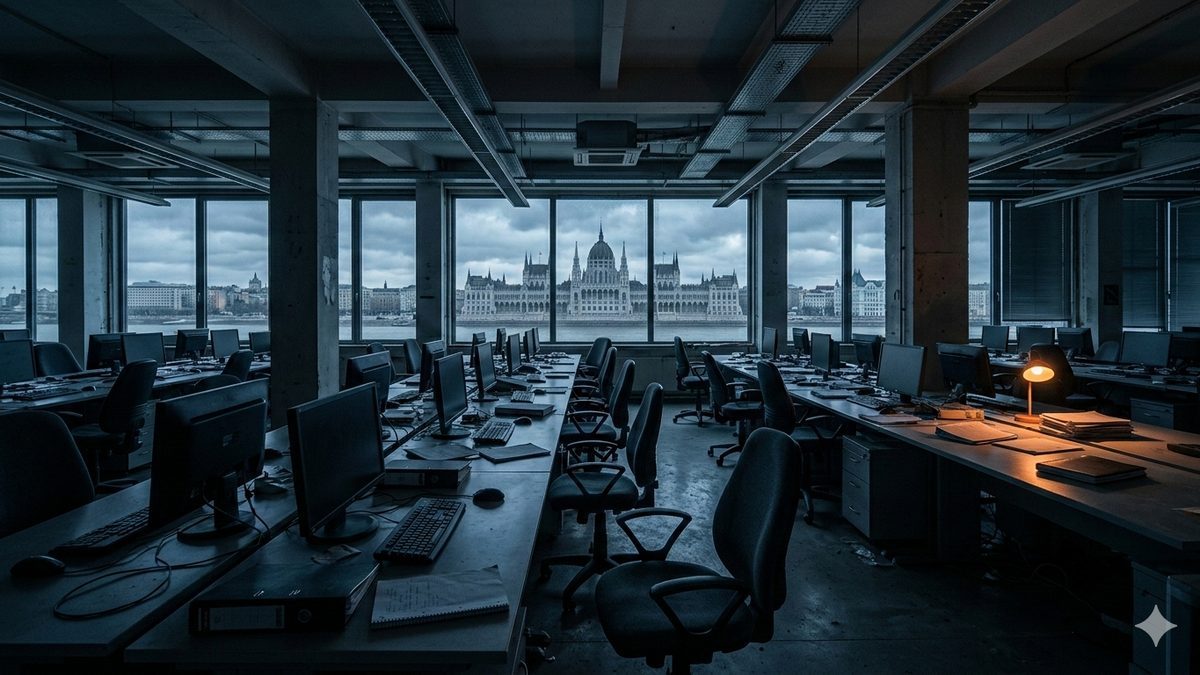
The article maps in detail the fifteen-year process by which the Fidesz party, under the leadership of Viktor Orbán, systematically gained control of roughly 80% of the Hungarian media market. It describes the legislative changes, the creation of a loyal regulatory authority, media acquisitions by friendly oligarchs, the emergence of the KESMA media foundation uniting hundreds of outlets, and the economic starvation of independent newsrooms through state advertising. Despite this, an ecosystem of independent online media funded by donations and subscriptions survives in Hungary.
Hungary, over fifteen years of Fidesz rule, has transformed from one of the freest media landscapes of post-communist Europe into a country where roughly 80% of the media market is controlled by entities tied to the governing party. This process was not a sudden coup but an elaborate, gradual strategy employing legislative changes, regulatory pressure, economic leverage, and acquisitions by friendly businessmen. The key to understanding the whole story, however, is the fact that the Hungarian media landscape was not ideal before 2010 — there were legitimate complaints about left-liberal bias, foreign ownership, and the legacy of the post-communist transformation. Fidesz exploited these real problems to build an unprecedented concentration of media power that goes far beyond any democratic "rebalancing."
Before Fidesz came to power in 2010, Hungary was rated very well in the area of press freedom. Reporters Without Borders (RSF) ranked the country 25th in 2009, and Freedom House classified it as "free." The media market was pluralistic, with dozens of television stations, newspapers, radio stations, and internet portals.
A key feature of the pre-Orbán media market was dominant foreign ownership. The German conglomerates Bertelsmann (RTL Klub), ProSiebenSat.1 (TV2), Axel Springer (regional dailies, the tabloid Blikk) and Deutsche Telekom (Origo.hu via Magyar Telekom), the Swiss Ringier (Népszabadság), and the Austrian Russmedia (eastern Hungarian regional dailies) — these were all foreign firms controlling the most significant Hungarian media. Domestic ownership was limited: public-service media (MTV, Magyar Rádió), the conservative daily Magyar Nemzet in the hands of Lajos Simicska (then a close ally of Orbán), and a few smaller entities.
The system, however, was not politically neutral. Freedom House noted that "most private news media clearly identify with one side or the other of the political spectrum." The largest quality daily, Népszabadság (originally the organ of the Communist Party, transformed after 1989 into a center-left paper), had a clear left-wing orientation. The internet portals Index.hu and Origo.hu were perceived as liberally inclined. The conservative media environment was structurally weaker. State advertising flowed preferentially to government-friendly media even under the Socialist governments — though on an incomparably smaller scale than after 2010, when its share of the total advertising market rose from an estimated 3% to 32%.
The Hungarian commentator Boris Kálnoky argued in Hungarian Review: the Hungarian media market was not a naturally developed, healthy, and independent media environment before Orbán returned to power in 2010. It was to a large extent a political market appropriated by the left. This perspective is important for understanding why a considerable part of the Hungarian public perceived the later media changes not as the liquidation of a free press, but as a reassignment of politically biased media to "the other side."
Fidesz did not win its two-thirds constitutional majority in 2010 solely thanks to its media strategy. The decisive factor was the devastating economic crisis, which destroyed trust in the Socialist government and created an atmosphere in which a radical reconstruction of the political system was perceived as a necessity.
Hungary was one of the first and worst-hit countries in the 2008 financial crisis. GDP fell by roughly 6.4% in 2009, and unemployment jumped from 7–8% to nearly 12%. The country had to request a rescue package from the IMF, the EU, and the World Bank worth approximately 20 billion euros (25 billion dollars). Austerity measures — wage freezes, abolition of the thirteenth pension, tax increases — struck a population already suffering the consequences of the crisis.
The most painful aspect was the foreign-currency mortgage crisis. In 2004–2008, after Hungary's accession to the EU and amid high forint interest rates (14–18%), millions of Hungarians took out mortgages denominated in Swiss francs and euros with lower interest rates. By 2009, foreign-currency loans made up over 70% of all household loans — roughly 7,300 billion forints (28% of GDP). When the forint sharply weakened (the CHF/HUF rate from 150 to 250, i.e. by 67%), mortgage payments rose by 70–80%, and in some cases doubled. Every fourth mortgage holder was in arrears. Roughly 1.3 million households were affected.
A political earthquake was added to the economic collapse. On 26 May 2006, Prime Minister Ferenc Gyurcsány delivered a speech at a closed session of the Socialist Party's parliamentary caucus in Balatonőszöd, in which he sharply criticized his own government. The recording leaked on 17 September 2006, when it was broadcast by Hungarian Radio. In the speech Gyurcsány said, among other things: "Evidently, we lied throughout the last year and a half to two years" (Hung. "Nyilvánvalóan végighazudtuk az utolsó másfél-két évet"). Mass protests followed; demonstrators stormed the building of the state television, and police deployed tear gas and rubber bullets. Gyurcsány's popularity fell to 10–15% and never recovered. The speech became a lasting symbol — even in 2021, according to polls, 75% of Hungarian voters agreed that Gyurcsány should leave politics.
The result of the April 2010 election was crushing: Fidesz-KDNP won 263 of 386 seats (68.1% of the seats) with 52.7% of the vote. For the first time since 1989, a single party held a two-thirds constitutional majority. Orbán declared: "A revolution has taken place in the ballot boxes."
Fidesz used its constitutional supermajority immediately. In the second half of 2010 it passed three key media laws, which entered into force on 1 January 2011 — symbolically on the same day Hungary assumed the EU presidency.
Act LXXXII of 2010 created the National Media and Infocommunications Authority (NMHH) as a single regulator with unprecedented powers. The president of the NMHH is appointed directly by the prime minister for a nine-year term — the first president was the former Fidesz MP Annamária Szalai. The NMHH president is automatically the chair of the five-member Media Council (Médiatanács), whose members are elected by parliament by a two-thirds majority, also for nine years. Thanks to the constitutional supermajority, all members were nominated and elected exclusively by Fidesz.
Regulatory powers were extended from broadcasting to print and internet media — an unprecedented step in the EU. The Media Council gained the power to fine media for "unbalanced reporting" and "incitement of hatred against any majority" — formulations vague enough for politically motivated enforcement. It could suspend broadcasting rights and impose fines that had to be paid even before an appeal. Act CLXXXV of 2010 merged all public-service media (MTV, Magyar Rádió, Duna TV, the news agency MTI) into MTVA (Médiaszolgáltatás-támogató és Vagyonkezelő Alap) under the control of the Media Council.
International reactions were sharp. On 4 January 2011, the daily Népszabadság printed the headline "Press freedom in Hungary has ended" in all 23 official languages of the EU. Members of the European Parliament greeted Orbán with their mouths taped shut. The OSCE, the Council of Europe, the UN Special Rapporteur on freedom of expression, and the European Commission all criticized the law. Some of the most problematic provisions (forcing journalists to reveal their sources) were subsequently struck down by the Constitutional Court, but the core of the regulatory framework remained intact.
The legislative framework created the conditions; the actual capture of the media took place through acquisitions by businessmen tied to Fidesz. The process can be divided into three phases.
The Simicska phase (2010–2014). Lajos Simicska, Orbán's college dormitory roommate and a former treasurer of Fidesz, controlled the original pro-media infrastructure — Hír TV, Magyar Nemzet, Class FM, Lánchíd Rádió. Almost all state advertising flowed to his firms. After the Fidesz victory in 2014, however, a public falling-out occurred between Orbán and Simicska. In 2015, Orbán openly called on his supporters in a television interview to invest in media: "I encourage everyone — it cannot be a task for the government, but I encourage our political community." Simicska's media lost state advertising and gradually folded.
The new-businessmen phase (2015–2018). The Hollywood producer András Vajna (appointed government film commissioner) bought TV2 — one of the two main commercial broadcasters — in 2015, partly with the help of loans from state banks. Under Vajna, TV2 became an instrument of government propaganda and received 67% of state television advertising, compared with a mere 1% for the independent RTL Klub, which had higher viewership. Lőrinc Mészáros, Orbán's childhood friend and the mayor of Felcsút, rose from a small businessman to become the richest Hungarian (estimated fortune of 1.67 billion euros). Through shell companies registered in the Seychelles and with the help of the Austrian intermediary Heinrich Pecina, Mészáros acquired Mediaworks — the largest newspaper publisher in the country. Ádám Matolcsy, the son of the central bank governor, bought the portal Origo.hu. Mária Schmidt took over the economic weekly Figyelő.
The liquidation of regional media was especially effective. All 19 regional dailies in Hungary passed under the control of businessmen tied to Fidesz over the course of just nine months (2016–2017). Before the 2018 election, all these dailies printed an identical interview with Orbán titled "Both votes for Fidesz." The independent weekly Magyar Hang still cannot find a printer in Hungary to this day and has to print in Bratislava.
Case studies illustrate the methods. The daily Népszabadság — the most-read political daily in Hungary — was abruptly shut down on 8 October 2016: journalists came to work on Saturday morning and found that their email accounts had been blocked and access to their offices denied. The website was immediately taken offline and the archives made inaccessible. Fidesz deputy chairman Szilárd Németh publicly declared: "It was about time that this newspaper was unexpectedly closed." The portal Origo.hu, one of the two dominant news servers, underwent a transformation in 2014, when editor-in-chief Gergő Sáling published an investigation into the expenses of senior Fidesz official János Lázár — and was subsequently dismissed. At least 30 journalists resigned in protest. Today, according to observers, Origo is "one of the most aggressive mouthpieces of Fidesz."
The culmination of the consolidation was the creation of KESMA (Közép-Európai Sajtó és Média Alapítvány, the Central European Press and Media Foundation) in November 2018. On the morning of Wednesday, 28 November 2018, the lawyer József Tamás Kertész filed eight sets of documents with the commercial courts. The owners of eight media companies simultaneously donated their media outlets to the foundation. Within a few days, roughly 476–500 media products passed into KESMA: Hír TV, Origo, Magyar Nemzet (revived as a pro-government daily), Mandiner, Nemzeti Sport, all 19 regional dailies, dozens of internet portals, radio stations, and magazines.
The legal mechanism was crucial: Prime Minister Orbán signed a government decree declaring the establishment of KESMA a "merger of strategic national importance in the public interest." This exempted KESMA from review by the Competition Authority as well as from a media-plurality assessment by the Media Council. The Constitutional Court upheld this exemption in June 2020. Government spokesman Zoltán Kovács, with remarkable candor, described KESMA as an institution of "strategic national importance" because it achieved that "approximately 50% of the Hungarian press communicates the government's position."
The practical consequence is coordinated content: the same headlines, the same narratives across hundreds of outlets. KESMA created massive economic barriers for independent competitors. The revenues of Mediaworks alone (the core of KESMA) reached 72 billion forints in the last reported year, while all independent competitors together generated 12–13 billion.
The state became the largest advertiser in Hungary — larger than the second and third largest advertisers combined. In 2020, 86% of all state advertising went to pro-government media. Pro-government television received 95% of state television advertising, pro-government internet portals 90%, pro-government weeklies 92%. Total annual spending on state advertising reached roughly 365 million euros in 2020. This system economically starves independent media — Index.hu, during its period of independence, received virtually no state advertising. Moreover, private firms are afraid to advertise in independent media because of possible government reprisals, as documented by the organization Mérték Media Monitor.
The public-service media underwent a complete transformation. MTVA, with an annual budget exceeding 100 billion forints (in 2024 it was 126.6 billion), laid off over 1,600 journalists in several waves. Current and former employees testified to Human Rights Watch that reporters receive instructions on what and how to report, which expressions to use and which to avoid. The word "refugee" was banned during the 2015 migration crisis, and citing reports by HRW or Amnesty International became taboo. An internal audio recording from 2019 captured a public-service media editor telling colleagues that they "do not practice independent journalism." Fidesz and government officials received 81% of the airtime on the public channels M1 and Duna. Public trust fell: only 23% of citizens considered the MTVA channels trustworthy.
Despite the massive pressure, a vibrant ecosystem of independent media still exists in Hungary, one that has adapted to the new conditions — moving almost entirely into the online space and developing new financing models.
Telex.hu, founded on 2 October 2020 by former Index journalists after a mass resignation (editor-in-chief Veronika Munk, director Márton Kárpáti), raised one million euros from 33,000 donors in its first month. Today it has over 70 editorial staff and 500,000–600,000 daily readers. Since 2023 it has operated as an employee-owned enterprise — a unique model in Hungarian journalism. The server 444.hu, founded in 2013 by former Origo journalists, broke the presidential-pardon scandal in February 2024 that led to the resignation of President Katalin Novák. Partizán, Márton Gulyás's channel on YouTube, became one of the ten most-used news sources in Hungary, with 343,000 subscribers and 6.5 million monthly views. Its interview with Péter Magyar in February 2024 garnered 2.7 million views in a country of 10 million people. Gulyás commented on this for Der Spiegel: "The free press in Hungary has fled to YouTube."
Direkt36 (the investigative center of András Pethő) revealed, as part of the Pegasus project, that the Hungarian government surveilled independent journalists with the Israeli spyware program. Two of its reporters (Szabolcs Panyi and András Szabó) were confirmed as targets of this surveillance. Átlátszó (the first investigative portal in Hungary financed by public crowdfunding, founded in 2011) faces investigation by the Sovereignty Protection Office, which labeled its requests for public information as "espionage." HVG continues as an independent economic weekly with a successful paywall model. Klubrádió, the main independent radio station, was pushed off the FM band in February 2021 after the Fidesz-controlled Media Council refused to renew its license over formal administrative failings — in particular, the failure to submit two monthly reports on broadcasting quotas. In February 2026, the Court of Justice of the EU ruled that Hungary had violated EU law — the Media Council's decision was disproportionate and discriminatory. As of March 2026, however, Hungary had not restored the frequency.
Current press-freedom assessments show the depth of the problem: RSF ranks Hungary 68th (2025), and Freedom House classifies the country as an "autocratizing hybrid regime" — the largest decline in democratic score of all 29 assessed countries over two decades. Trust in the news is, together with Greece, the lowest of all 48 markets surveyed — a mere 22% according to the Reuters Institute Digital News Report 2025. In December 2025, the European Commission launched the first infringement proceedings under the European Media Freedom Act (EMFA) against Hungary — 15 years after the adoption of the media laws.
Understanding the Hungarian media situation requires reflecting on deeper causes that extend beyond the person of Viktor Orbán.
The failure of the post-communist transformation created the structural conditions. At the round-table negotiations in 1989, the opposition did not secure a meaningful restructuring of the state media. "Nomenklatura privatization" allowed former communists to convert political contacts into economic power — the future prime minister Gyurcsány became one of the richest Hungarians by profiting from the privatization of state assets. A new media law was not adopted until 1997. The model of "foreign capital provides credibility while post-communist networks retain editorial influence" repeated across the media sector.
The Treaty of Trianon of 1920, in which Hungary lost two-thirds of its territory, remains a deep collective trauma — a 2020 survey by the Hungarian Academy of Sciences found that 85% of respondents consider it the most significant national tragedy. This deep sense of victimhood creates the emotional soil for Orbán's narrative of sovereignty and resistance to Brussels. The 2004 referendum on dual citizenship, in which the MSZP campaigned against granting citizenship to Hungarians abroad, permanently branded the left as "anti-national" and handed Fidesz a monopoly on patriotic rhetoric.
Disappointment with EU membership contributed to the weakening of the liberal-democratic consensus. After 20 years of membership, the living standard of Hungarian households remains among the lowest in the EU. Firms receiving European funds, according to analyses by Balkan Insight, "grew more slowly than those that did not receive them." The 2008 rescue package and the subsequent austerity measures severed the connection between the EU, liberal governance, and prosperity.
A comparison with the V4 countries shows why media consolidation went furthest in Hungary. In the RSF 2025 ranking, the Czech Republic is 10th, Poland 31st, Slovakia 38th — Hungary 68th. Poland under PiS rule (2015–2023) offered the closest parallel, but a larger and more diverse media market and a stronger civil society limited the scope of the capture. After the defeat of PiS, Poland began to reverse the process, showing that the Polish situation was less entrenched. Hungary went further due to a smaller media market, a constitutional supermajority enabling constitutional changes, deeper post-communist media problems legitimizing the restructuring, and the fragmentation of the opposition after the Gyurcsány scandal.
The academic and analytical framework for understanding the Hungarian situation is well developed. Professor Péter Bajomi-Lázár of Budapest Business University introduced the concept of "party colonization of the media" — showing how parties use media control not only to suppress criticism but also to distribute patronage, set the agenda, and gain political legitimacy. Marius Dragomir of the CEU Democracy Institute called Hungary a "textbook example of media capture" and documents how Orbán's business circles expand abroad as well (investments in Euronews, the telecom expansion of 4iG).
Mérték Médiaelemző Műhely (Mérték Media Monitor), led by Ágnes Urbán and Gábor Polyák, has published annual reports on indirect censorship mechanisms since 2014. Their most recent report, from February 2026, prepared in cooperation with NYU School of Law, states: "The presence of independent media should not be confused with a healthy media environment. They survive despite the system, not because of it." The Hungarian Helsinki Committee, in its contribution to the European Commission's 2026 Rule of Law Report, warns that "the situation of civil society has further deteriorated" and that a new draft law could enable "blacklists, funding bans, and ultimately the dissolution of civil society organizations and media."
A fair assessment requires a serious consideration of the pro-government arguments. Some of Fidesz's complaints about pre-Orbán media were legitimate: the post-communist media ecosystem did indeed inherit left-liberal editorial cultures; most political journalists in Budapest were culturally liberal; conservative media had a structural market disadvantage. Foreign ownership raised legitimate questions about whether foreign firms were investing in the quality of Hungarian journalism or merely extracting profits. When the crisis came in 2008, a number of foreign media firms began to leave Hungary.
In 2015, at CPAC in Budapest, Orbán openly advised American conservatives: "Have your own media." The narrative of "national media" resonated — the same logic of "financial nationalism" applied to banks (raising the domestic share of bank ownership from less than 30% to over 50%) was extended to media as well. The argument that Hungary needed to build a conservative institutional base destroyed by 50 years of dictatorship had a historical logic.
The gap between the complaint and the response, however, is the defining feature of the whole process. Fidesz did not "rebalance" the media — it created an unprecedented concentration of media power, where roughly 80–90% of the media market is under the direct or indirect control of the government through the KESMA foundation, regulatory capture, advertising boycotts of independent media, and acquisitions by friendly businessmen. The 2022 Eurobarometer, showing trust in public-service media at a mere 22%, suggests that even the rebuilt media lack credibility. What began as a solution to legitimate problems became a systematic instrument for maintaining power.
As Mérték director Ágnes Urbán summed up: "Hungary is a critical test case for media freedom in the European Union." The sophistication of the Hungarian model — preserving the democratic form while undermining media freedom through legal, administrative, and economic pressures instead of open censorship — makes it a relevant warning for all of Europe.
The Hungarian case offers several key lessons that go beyond the framework of a single country.
First, media capture need not proceed through open censorship — a sophisticated combination of a legislative framework, economic leverage, and ownership changes can be more effective and harder to challenge.
Second, economic crises create windows of opportunity for radical institutional overhauls — without the foreign-currency mortgage crisis and the Gyurcsány scandal, Fidesz would probably never have obtained a constitutional supermajority.
Third, legitimate complaints can be abused to justify disproportionate responses — the pre-Orbán media were indeed not neutral, but the answer to partisan bias cannot be an even deeper partisan consolidation.
Fourth, independent journalism has demonstrated extraordinary resilience — Telex, 444, Partizán, and others show that quality independent reporting can survive even in an exceptionally unfavorable environment, provided it finds alternative financing models and earns readers' trust.
At the same time, however, the persistent media "deserts" in the Hungarian countryside, where no independent news source exists, show the limits of this survival. Hungary remains a living experiment in how far democratic institutions can erode without formally ceasing to exist.
Transparency of creation
The concept, structure, and editorial line of the article are the work of the author, who prepared the content outline, established the key theses, and directed the entire creative process. Generative AI (Claude Opus 4.6, Anthropic) was used as a tool for research, fact-checking, and elaborating the author's draft.
The author verified the key findings and approved the final wording. No part of the text was published without conscious authorial control. Factual data were verified against the publicly available sources cited in the text.
The procedure complies with the transparency principles of EU Regulation 2024/1689 (AI Act). #poweredByAI
Read the Czech original on Médium.cz.
AI · Claude — machine translation, may contain inaccuracies.