
A Hundred Milliseconds You Can't React To: The Physics of Pouring Gasoline on a Fire
The article explains the physics and chemistry of why pouring gasoline onto a fire is deadly dangerous: a low flash point (-43 °C), vapors heavier than air that sink toward glowing embers, and a phenomenon called flame jetting, in which the fire races back to the canister faster than a person can react. It backs this up with epidemiological data from burn centers (the typical victim is a young man, often under the influence of alcohol, with extensive burns and high mortality) and warns that the impression of safety is sustained only by the statistics of those who survived.

Why Is the Coffee at Work Sour? It's Not the Coffee Machine — It's the Water
The author investigates why the same coffee tastes good at home but sour at work, and concludes that the main culprit is the water — specifically the chlorine and low magnesium content of Prague's tap water from the Želivka reservoir. He explains the chemistry of coffee acids, the buffering role of bicarbonates and calcium/magnesium, the water profile recommended by the SCA, and compares common Czech bottled waters (including the Magnesia paradox for Turkish coffee). In his view, coffee rests on four levers — the bean, roast and freshness, grind, and water — and he offers a practical recipe for blending waters to get a better cup at the office.

An infrared thermometer at home: five practical uses and the one quantity everything depends on
The article maps the five most useful household uses of a non-contact infrared thermometer — from preventing mold, through diagnosing thermal bridges and windows, to checking your washing machine, iron, and the temperature of oil in a pan — and the physics that ties them all together. The author shows that the key to accurate measurement is surface emissivity: without grasping it, the pyrometer reads nonsense on shiny metal, while on plaster, oil, or matte ceramic it measures reliably. He traces the whole principle back to Herschel's 1800 discovery of infrared radiation, which anticipated the theory of thermal radiation by a hundred years.

Just a Little Further and I've Got It! The Anatomy of Problems That Look Almost Solvable
The article maps a peculiar class of problems that look easily solvable and yield promising partial results, yet for which no general solution exists within the given framework in principle — from the ancient squaring of the circle, angle trisection, and perpetual motion, through Gödelian incompleteness and the Collatz conjecture, to today's promises of fusion and AGI. The author shows that the trap has two layers: a mathematical structure (specific cases can be solved; only the general step is impossible) and the brain's cognitive mechanisms (the near-miss effect, confirmation bias, sunk costs, the Dunning–Kruger effect), which together keep the solver in the illusion of "just a little more and I've got it." The point is that impossibility depends on the chosen rules — the Greek problems can be solved by folding paper (origami) — and the key question for distinguishing perseverance from obsession is Popper's "what would refute my hypothesis?"

Can You Cut a Ball Apart and Reassemble It into Two? How Axioms Split Mathematics into Parallel Universes
The article explains how Gödel's and Cohen's proofs of the independence of the continuum hypothesis showed that mathematics is not a monolithic edifice with a single set of truths, but a branching landscape of parallel universes contingent on the choice of axioms. It describes the philosophical dispute between pluralists (Hamkins) and proponents of a single canonical universe (Woodin), and examines whether AI systems such as AlphaProof or Lean 4 can systematically explore these axiomatic landscapes.
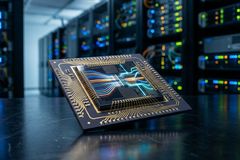
Photonic processors: light instead of electrons changes the rules of the game in data centers
Photonic processors, which compute using light instead of electrons, are moving from the lab into commercial deployment. Companies such as Lightmatter, Ayar Labs, and Celestial AI (acquired by Marvell for up to $5.5 billion) are achieving order-of-magnitude lower energy consumption and higher data-transfer rates, but still face challenges in memory, precision, and nonlinear operations. The first commercial products are expected in 2027–2028.

The Cook Who Shook Mathematics — and the Mystery Waiting for You
The article tells the story of Yitang Zhang, an unknown mathematician working at Subway who in 2013 achieved a breakthrough in number theory by proving that there are bounded gaps between primes. It describes the subsequent work of Maynard and the Polymath project, which lowered the bound to 246, and maps out five independent lines of research (quantum physics, fractals, noncommutative geometry, partition functions, the Langlands program) that point to the existence of a deep structure behind the distribution of primes. The article also explains the practical importance of primes for cryptography and presents open problems, including the Riemann hypothesis.

Sucking CO₂ out of the atmosphere costs 20× more than not emitting it
The article analyzes Direct Air Capture (DAC) technology for removing CO₂ from the atmosphere and shows that it is orders of magnitude more expensive ($230–1,000/t) than preventing emissions ($0–50/t). Current global DAC capacity captures as much CO₂ in a year as humanity produces in under a minute, and scaling it to the level needed would require trillions of dollars and terawatts of clean energy. DAC has its place in offsetting unavoidable emissions, but it must not serve as an alibi for postponing systemic change — ending the burning of fossil fuels, protecting forests, and transforming industry.