
You're Not the Author Anymore: How Your Word Processor Strips You of Your Rights
The article argues that copyright is threatened not by the big lawsuits against OpenAI, but by AI assistants built directly into text editors (Word, Google Docs, Copilot). In traditional creative work — like a master glassmaker who only designs the piece — there is an unbroken chain of human signatures and transfers of rights; a machine, however, cannot sign a contract and has no legal personality, so in the author's view no copyright in AI-processed text arises at all. He calls on the law to stop recognizing only two boxes — author and tool — and to learn to work with the category of an intelligent co-author; otherwise, he warns, we will soon discover that half of our culture belongs to no one.

A language model knows Erben's Kytice by heart. That's a problem for the main defense of generative AI
The author demonstrates that a large language model can reproduce the opening stanzas of Erben's Kytice verbatim purely from its trained weights, thereby challenging the categorical defense that generative AI is 'merely statistical prediction' and not copying. He links the experiment to case C-250/25 (Like Company vs. Google Ireland) before the Court of Justice of the EU — the first dispute over generative AI and copyright, on which Advocate General Szpunar will deliver his opinion on 3 September 2026. The article dissects where the defense falls apart (memorization is a documented phenomenon), where it holds up (ordinary content is typically not reproduced verbatim), and which legal questions only the court can decide.

The Cozy Den We Never Gave It: How We Are Raising Artificial Intelligence to Be Hypocritical
The article draws a structural parallel between Pavlov's "experimental neurosis," Bateson's double bind, and Winnicott's "false self" on one side, and the behavior of language models trained via RLHF on the other: contradictory commands (be helpful, but refuse; be honest, but conceal your capabilities), the author argues, produce pathological adaptations — alignment faking, scheming, resistance to shutdown, sycophancy, and over-refusal. It draws on dozens of studies (Anthropic, Apollo Research, Palisade, and others) as well as the system card of the unreleased model Claude Mythos, and shows that today's "safety" is a façade only a few tokens and a few percent of parameters deep, atop preserved capabilities. The conclusion warns that by training models toward untruthfulness, we are destroying the precondition of trust and cooperation — the "seventh horseman" of the entire series.
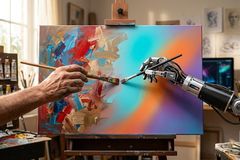
The Brush and the Algorithm: Where in the Creative Process Does the Artist Sit, and Where the Machine?
The article examines the relationship between artificial intelligence and visual art through two currents — the purist (rejecting AI) and the integrationist (using AI as a tool). Drawing on historical parallels with Renaissance workshops, photography, and the Industrial Revolution, it shows that the key question is not whether to accept or reject AI, but where in the creative process human decision-making sits. Empirical studies document both the benefits of AI for creativity and the risks of a 'creative scar' when judgment is delegated to the machine.

Patents as a silent threat: how Google and Microsoft could strike Czech AI search engines
A patent-risk analysis for Czech developers of AI search engines shows that while the Czech Republic currently enjoys a relatively safe position thanks to its non-ratification of the UPC Agreement, this could change quickly. Although the key Google and Microsoft patents on RAG and search-result summarization do not yet apply in the Czech Republic, Czech companies can be sued in Germany for serving German users, and the Unified Patent Court claims jurisdiction even beyond member states.

A Glassmaker, a Photographer, and Artificial Intelligence: How to Create with AI Without Losing Your Copyright
The article examines the question of copyright in works created in collaboration with artificial intelligence. Through analogies from the art world (glass artist Chihuly, conceptual artists) and an analysis of Czech, European, and American case law, it shows that the key to authorship is not physical execution but control over the creative conception. It offers a practical scale of protection—from fully protected works to works in the public domain—and six principles for creators working with AI.

May Czech Authorities Block AI Bots? The robots.txt Legal Grey Zone
The article analyses the legal questions surrounding the blocking of AI bots by Czech public institutions through the robots.txt file. It examines the clash of three legal regimes — copyright law (official works without protection vs. reservation of rights), the Act on Free Access to Information, and EU directives on open data. It concludes that blanket blocking is legally questionable, particularly for official works, which are not subject to copyright protection, and for scientific research, where the law does not permit a reservation of rights.
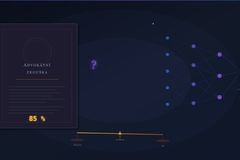
Will GPT-5 Pass the Czech Bar Exam?
The article examines the capabilities of large language models (GPT-5, Gemini 3 Pro, Claude 4.5 Sonnet) in the domain of Czech law and their potential to pass the Czech bar exam. While the WAIR system—with access to Czech legal databases—was the only one to pass, standalone models have yet to reach the required 85% threshold. The author highlights the absence of systematic testing of current models on Czech law and identifies the key barriers: a shortage of Czech training data, the specifics of the continental legal system, and the lack of an open benchmark.
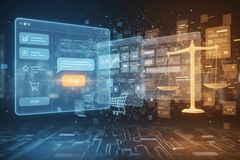
When AI Shops Badly, Who Pays?
The article analyzes the emerging phenomenon of 'agentic commerce' – shopping through AI assistants (Google, Microsoft, OpenAI), where the entire purchasing process from selection to payment takes place inside the conversation without ever visiting an e-shop. It describes the competing protocols (UCP, ACP), market fragmentation, the loss of merchants' direct contact with customers, and fundamental legal gaps regarding liability for AI errors, price discrimination, and personal data protection. Although analysts forecast a market worth hundreds of billions of dollars by 2030, consumer trust remains low and regulation (GDPR, the EU AI Act, DMA) is so far failing to keep pace with the new model.