Everyone Writes, Nobody Reads — and Then Came Artificial Intelligence
Scientific publishing faces a paradox: nearly four million articles are produced every year, yet most are never read in full. Artificial intelligence tools (Semantic Scholar, Consensus, Elicit, PaperQA2) make it possible for the first time to efficiently search and synthesize millions of texts, dramatically cutting the time needed for systematic reviews. The article analyzes the structural causes of this oversaturation (publish-or-perish pressure, predatory journals, publisher oligopoly) and argues that the ability to formulate precise queries for AI is becoming a key skill of the 21st century.
Věda stojí na paradoxu... — I'll provide the translation directly, as requested.
Science rests on a paradox: nearly four million scientific articles are produced each year, yet most of them are never read in full by anyone. This problem is not new, but its scale is unprecedented. While the volume of publications grows at a rate of four percent annually and doubles roughly every nine years, human reading capacity remains unchanged — even the most diligent scientists manage to read at most a few hundred articles per year. Into this oversaturated ecosystem, artificial intelligence tools are now entering, making it possible for the first time in the history of science to extract knowledge from millions of texts that no human would ever reach. This is not just another article on the pile — it is a tool that can finally read that pile.
According to data from the STM association, approximately 3.9 million scientific articles, reviews, and conference papers were published worldwide in 2024. Over the past ten years (2013–2023), the volume of publications rose by roughly 47 percent, at an average annual growth of around four percent (STM OA Dashboard). The historical perspective is even more dramatic: since the Second World War, the number of scientific articles has doubled approximately every nine years (Bornmann and Mutz, 2014; IEEE Pulse, 2019). The threshold of fifty million articles ever published was surpassed as early as 2009 (Jinha, Learned Publishing, 2010).
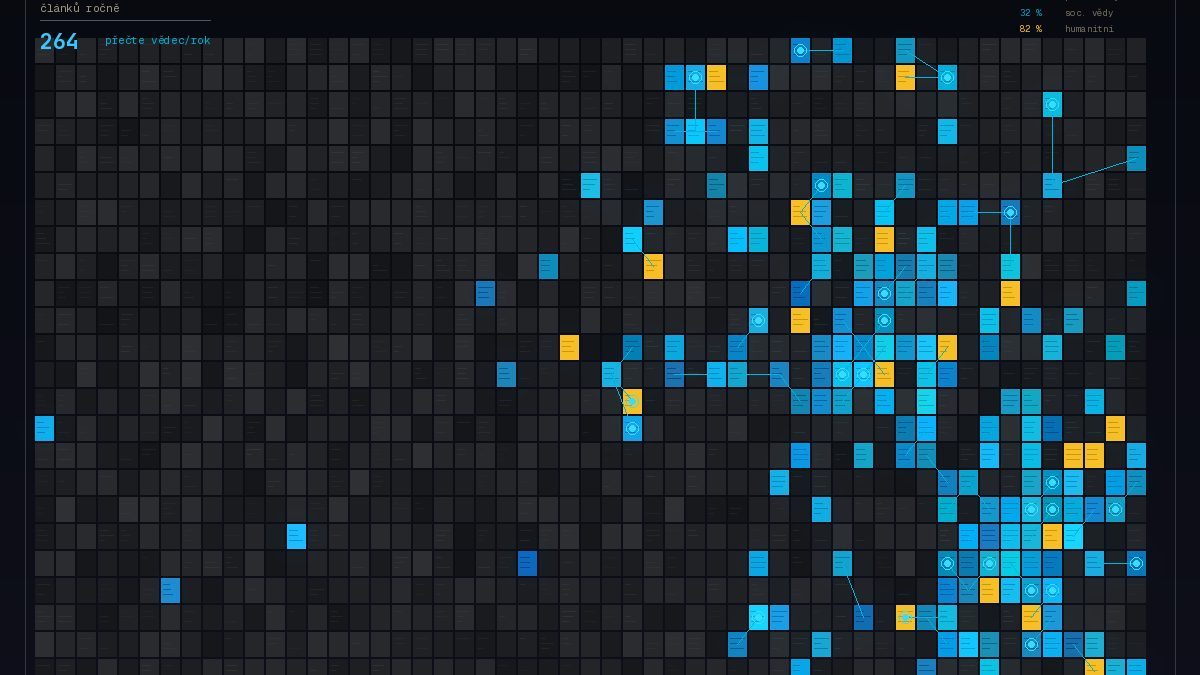
Who reads all of this? Practically no one. Researcher Carol Tenopir and her team have been tracking scientists' reading habits since 1977. According to their long-term study (Tenopir et al., 2009, 2012, 2019), American scientists read an average of 264 articles per year, devoting roughly thirty minutes to each. This means that even if a scientist did nothing but read, over an entire career they would manage only a tiny fraction of the output of their own field. Tenopir summed it up for Nature in 2014: "People have probably reached the limit of the time they have available to read articles." In biomedicine, the PubMed database indexes nearly three new records per minute. In some specializations — for instance, research on wildfires in the western United States — hundreds of articles appear annually on a single topic.
The famous claim that "ninety percent of scientific articles are never cited" comes from a review article by Lokman Meho in Physics World (2007), but it is misleading. As an investigation by Dahlia Remler, published on the LSE Impact of Social Sciences blog (2014), showed, the figure was inserted into the text by an editor without a proper source — Meho himself confirmed this. The original study by Hamilton in Science (1990, vol. 250, pp. 1331–1332) found that 55 percent of articles published between 1981 and 1985 were not cited within five years — but this figure also includes accompanying items such as letters to the editor, corrections, and conference abstracts.
More careful analyses reveal a more varied picture. According to a study by Larivière, Gingras, and Archambault (2009, Journal of the Association for Information Science and Technology), within a five-year window 12 percent of articles in medicine remain uncited, 27 percent in the natural sciences, 32 percent in the social sciences, and an alarming 82 percent in the humanities. An analysis of the Scopus database for articles published in 2005 showed that after ten years only 14.4 percent of American articles remained uncited, but 31.9 percent of Chinese ones (University of Nottingham Malaysia, 2016).
Even more remarkable is the finding by Simkin and Roychowdhury (Nature 420, 594, 2002): based on an analysis of the propagation of citation errors, they estimated that four out of five authors who cite an article have in fact never read it. The distribution of citations is moreover extremely uneven — in software engineering, 43 percent of articles have zero citations and a further 14 percent have only one (Garousi and Fernandes, 2015). The top one percent of most-cited authors meanwhile accumulate 21 percent of all citations, up from 14 percent in 2000 (Nielsen and Andersen, PNAS, 2021).
Behind the avalanche of publications lies a structural incentive known as "publish or perish." Career advancement, the acquisition of grants, and even survival in academia itself depend on the number of publications and citations. The consequences are measurable and troubling.
A 2016 Nature survey (Baker, 2016) of 1,576 scientists revealed that more than 70 percent had failed to reproduce another scientist's experiment, and more than half had failed to reproduce their own research. A more recent study by Cobey and co-authors (2024, PLoS Biology) of more than 1,600 biomedical researchers confirmed that 72 percent believe a reproducibility crisis exists, with 62 percent of respondents citing the pressure to publish as the main cause. Only 11 percent of respondents believed that more than 80 percent of articles in any category are reproducible.
Ioannidis's groundbreaking paper "Why Most Published Research Findings Are False" (PLoS Medicine, 2005) argued that most published findings are probably false due to biases, small samples, and publication pressure. Smaldino and McElreath (2016), using simulations, showed that the system of academic evaluation creates a "natural selection of bad science" — laboratories using less rigorous methods publish more and crowd out their more careful colleagues. Physicist Peter Higgs remarked to the Guardian in 2013: "Today I wouldn't get an academic job. I wouldn't be considered productive enough."
The number of hyper-prolific authors (more than 60 articles per year) has quadrupled over the past decade (Nature, 2023; Ioannidis et al.). Some researchers publish a new article on average every five days, raising questions about paper mills and questionable methods.
Predatory journals contribute to the problem of oversaturation. The Cabells Predatory Reports database recorded a total of 15,059 predatory titles in September 2021. Shen and Björk (2015, BMC Medicine) estimated that in 2014 these journals published approximately 420,000 articles — an eightfold increase over the 53,000 in 2010. Alarmingly, more than 300 potentially predatory journals were indexed in the Scopus database, to which they contributed more than 160,000 articles over three years, that is, nearly three percent of indexed studies (Nature, 2021; note: the original study in Scientometrics was subsequently retracted). Authors paid on average 178 dollars to publish in a predatory journal, and three quarters came from Asia or Africa.
The market for scientific publishing reaches estimates of 28 to 32 billion dollars annually (STM Report, 2018; Business Research Insights, 2024). The STM division of RELX/Elsevier alone reported revenues of 3.05 billion pounds in 2024 with an operating margin of 38.4 percent — high even compared with technology giants, although they too achieve margins of around 30 to 34 percent (Alphabet 34 percent, Apple 31 percent in 2024). Springer Nature achieved revenues of 1.85 billion euros with a margin of 27.7 percent. The five largest publishers (Elsevier, Wiley, Taylor & Francis, Springer Nature, SAGE) control over 50 percent of global revenues from academic publishing.
Access to a single article typically costs 30 to 50 dollars behind a paywall. The average annual subscription to a medical journal is 3,135 dollars, and for a chemistry journal as much as 8,572 dollars (UCSF Library, 2025). Top research universities spend over ten million dollars a year on journal subscriptions. Open-access publishing fees range from two to five thousand dollars at most prestigious journals, with Nature charging up to 9,500 euros (approximately 12,000 dollars). The share of university library spending on serial publications rose between 1986 and 2011 from 53 to 73 percent of the total materials budget (ARL Statistics).
This system creates a double barrier: scientists in developing countries and outside academia have no access to the articles, and even those who do have access cannot keep up with the reading.
Into this oversaturated and closed ecosystem comes a new generation of tools built on artificial intelligence, which is fundamentally changing the way scientific literature is handled. This is not a single technology but a whole range of platforms with varying specializations.
Semantic Scholar (Allen Institute for AI) indexes over 225 million articles with 2.8 billion citation links. Its automatic summarization feature generates one-sentence summaries for approximately 60 million articles — instead of a two-hundred-word abstract, it offers a twenty-word essence (Cachola et al., "TLDR: Extreme Summarization of Scientific Documents"). The service is entirely free and has seven million monthly users, which is crucial especially for scientists in developing countries without access to paid databases.
Consensus (founded in 2021) searches over 220 million articles and serves more than ten million researchers with 170 or more university partners. Its "consensus meter" displays scientific consensus as a distribution of yes/no/maybe answers, thereby converting complex literature into a clear format. A new research agent built on GPT-5 uses a multi-agent system with planning, reading, and synthesizing modules (OpenAI case study, 2025).
Elicit searches 138 million articles and specializes in systematic reviews. An independent evaluation for the German technology agency VDI/VDE showed a data-extraction accuracy of 99.4 percent (1,502 of 1,511 data points correct) and a 94 percent screening success rate compared with published systematic reviews. A study by Hilkenmeier and co-authors (2025, Social Science Computer Review) found that Elicit's accuracy (81.4 percent) did not differ in a statistically significant way from human reviewers (86.7 percent).
A breakthrough result of 2024 was the achievement of superhuman performance by the PaperQA2 tool from the company FutureHouse (arXiv 2409.13740). On the LitQA2 benchmark, it outperformed biologists with a doctorate or postdoctoral experience in literature retrieval and synthesis tasks. Its WikiCrow subsystem produced summaries more accurate than the actual articles on Wikipedia — according to a blinded evaluation by experts with a doctorate.
The claim that artificial intelligence "turns months into minutes" is partly advertising, but published studies document real and significant savings. Traditional systematic reviews typically require six months to several years (Borah et al., 2017; data from the PROSPERO registry), whereas AI tools achieve substantial savings of time and resources while maintaining accuracy.
More specific data is offered by a 2025 study (AI & Society, Springer): using ChatGPT for systematic reviews led to an average reduction in workload of 60 to 65 percent and time savings of up to 40 percent. The pilot study TrialMind (npj Digital Medicine, Nature, 2025) showed that human–AI collaboration improved search completeness by 71.4 percent and reduced screening time by 44.2 percent. In data extraction, accuracy rose by 23.5 percent with a 63.4 percent reduction in time. The Rayyan platform reports up to a 90 percent reduction in screening time, although independent evaluations show more modest savings in the range of 20 to 54 percent.
The realistic picture is therefore this: artificial intelligence does not replace scientists, but it turns weeks into days and months into weeks. Full automation of a systematic review is not yet possible — all published evaluations recommend hybrid workflows with human involvement.
The deepest impact of artificial intelligence tools lies in the fact that they make scientific knowledge accessible to people outside academia. Journalist Rahul Gupta (IJNet) describes how he uploads scientific articles into AI applications, which "explain them to him from various angles and identify gaps." A Nieman Lab survey (February 2026) of journalism professionals found that artificial intelligence has become "part of the daily workflow for research, structuring ideas, and first drafts." The Consensus platform was explicitly designed for "technology professionals who deep down long to be scientists" (founders Salem and Olson).
Surveys show that among scientists themselves, nearly 70 percent of researchers in the field of mental health already use ChatGPT for research tasks (Linardon et al., JMIR Mental Health, 2025). According to the Ipsos agency (2025), nearly half of Americans use artificial intelligence tools to search for information.
This democratization, however, also has its downside. The Columbia Journalism Review tested five AI research tools for journalistic purposes and concluded that the results are "too inconsistent and the stakes too high to recommend using these tools as journalistic shortcuts." The problem lies above all in the fabrication of nonexistent sources: while specialized tools such as Elicit and SciSpace show a near-zero rate of fabricated references, general-purpose language models fail significantly worse. A study in JMIR (2024) found that GPT-4 hallucinated citations in 28.6 percent of cases and Google Bard in as many as 91.3 percent. A Deakin University study (2025) showed that ChatGPT (GPT-4o) fabricated roughly every fifth academic citation, and more than 56 percent of all citations were either fabricated or contained errors. Of the fabricated citations with a DOI identifier, 64 percent pointed to real but entirely unrelated articles.
Another risk is excessive simplification. The Harvard Misinformation Review (2025) warns that even where a scientific consensus exists, artificial intelligence systems can mislead through over-simplification or an inappropriate metaphor. Knowledge workers, according to available surveys (Deloitte/Microsoft, 2025), spend more than four hours a week verifying AI outputs, and nearly half of corporate users have made at least one significant decision based on fabricated content.
The entry of artificial intelligence into the scientific ecosystem represents a fundamental qualitative shift, which Chowdhury and Chowdhury (2024, Journal of Information Science) describe as a "paradigm shift in access to information." Users pose questions in natural language; the tools search millions of sources, synthesize information from many documents, and present the results as summaries with references practically instantly. The key finding: the choice of the right tool, the formulation of the question, and further refinement play a crucial role.
This shift is giving rise to a new form of literacy. Federiakin and co-authors (2024, Frontiers in Education) propose a conceptual framework of "query formulation as a 21st-century skill" with four components: understanding the basic structure of a query, knowledge of the principles of querying, a method for constructing queries, and critical reasoning about the results. The authors argue that existing 21st-century competency frameworks are "insufficient to describe this skill." Knoth and co-authors (2024, Computers and Education: Artificial Intelligence) empirically confirmed that the quality of query formulation predicts the quality of a language model's outputs, and they call for the integration of educational content about artificial intelligence into curricula. The World Economic Forum, in its Future of Work 2025 report, identifies technological literacy and artificial intelligence as the key skills of 2030.
A number of university libraries already offer training in query formulation for artificial intelligence alongside traditional information literacy. The CLEAR framework (Lo, 2023, Journal of Academic Librarianship) defines its principles: conciseness, logic, explicitness, adaptability, reflection. This is not about replacing the scientific method, but about extending it — the ability to formulate precise questions becomes as important as the ability to design experiments.
The major publishers are responding to the wave of artificial intelligence with massive investments. Elsevier launched Scopus AI (2024) with augmented-search technology and ScienceDirect AI (March 2025) for full-text analysis of over 14 million articles. Springer Nature integrated artificial intelligence tools into the Snapp platform (January 2025), including the Geppetto fake-content detector and the SnappShot image-integrity check, tested on more than 100,000 submissions. Wiley entered into a partnership with Perplexity (May 2025) to integrate academic content into conversational search.
According to a survey by the publisher Frontiers among roughly 1,600 academics from 111 countries (Nature, Naddaf, 2026), more than half of researchers already use artificial intelligence for the peer review of articles — many in violation of publishers' guidelines. Since November 2025, the bioRxiv server has integrated the q.e.d Science tool, which uses generative artificial intelligence to analyze claims, identify gaps, and produce reviews within 30 minutes. Stanford has developed the Agentic Reviewer — a system of specialized agents evaluating articles across seven dimensions of quality.
A fundamental empirical finding was brought by Hao and co-authors (Nature 649, pp. 1237–1243, 2026) through an analysis of 41 million articles, of which roughly 311,000 were created with the help of artificial intelligence. They discovered a paradox: scientists using artificial intelligence produce more research, but across a narrower range of topics. They are more cited and advance in their careers faster — but artificial intelligence "automates established fields rather than supporting the exploration of new ones." A commentary by Storey (Nature 649, 2026) warns that artificial intelligence may lead to a narrowing of research diversity.
Open access and artificial intelligence create a positive feedback loop. The CORD-19 project during the pandemic demonstrated the linking of artificial intelligence and open access on a nearly complete body of COVID literature. The OpenAlex platform (2022) offers an open knowledge graph with more than 265 million records as a replacement for the discontinued Microsoft Academic Graph. The CORE database indexes over 290 million metadata records, of which approximately 33 million have full text with open access. Artificial intelligence needs open data — and this need in turn motivates the removal of paywall barriers.
Scientific publishing finds itself at a breaking point. A system that was designed for sharing knowledge has turned into a self-propelling machine for producing articles, where the pressure to publish destroys quality and most of the knowledge produced remains practically inaccessible — whether behind a paywall, or simply buried under a deposit of thousands more articles.
Artificial intelligence tools do not solve this problem by removing its causes, but by circumventing its consequences. For the first time in history, it is technically possible to extract knowledge from millions of articles that no human would read. Specialized platforms such as Elicit, Consensus, or PaperQA2 achieve accuracy comparable to, or higher than, that of human experts — in a fraction of the time. The key difference from general-purpose language models lies in the fact that these tools work directly with databases of verified articles, thereby radically reducing the risk of fabricated citations.
The deepest consequence is not technological, but cognitive. The shift from "you must read the articles" to "you must know how to ask the right questions" represents a new form of scientific literacy. This does not mean the end of reading — it means that reading ceases to be the bottleneck of access to knowledge. The risks are real: the fabrication of sources, excessive simplification, the narrowing of research scope. But the alternative — a system in which millions of articles that no one reads are published every year — is even worse. Science is finally getting a tool that can read faster than it writes.
Transparency of creation:
The conception, structure, and editorial line of the article are the work of the author, who prepared the content outline, established the key theses, and directed the entire creative process. Generative AI (Claude, Anthropic) was used as a technical tool for research, fact-checking, and elaborating the author's draft.
The author edited the outputs on an ongoing basis, verified key findings, and approved the final wording. No part of the text was published without human review. All factual data were verified against the publicly available sources cited in the text.
The procedure is in accordance with the requirements of Art. 50 of EU Regulation 2024/1689 (AI Act) on the transparency of AI-generated content. #poweredByAI
Read the Czech original on Médium.cz.
AI · Claude — machine translation, may contain inaccuracies.