The Salt Trap: How Industry Inverted Our Body's Mineral Balance
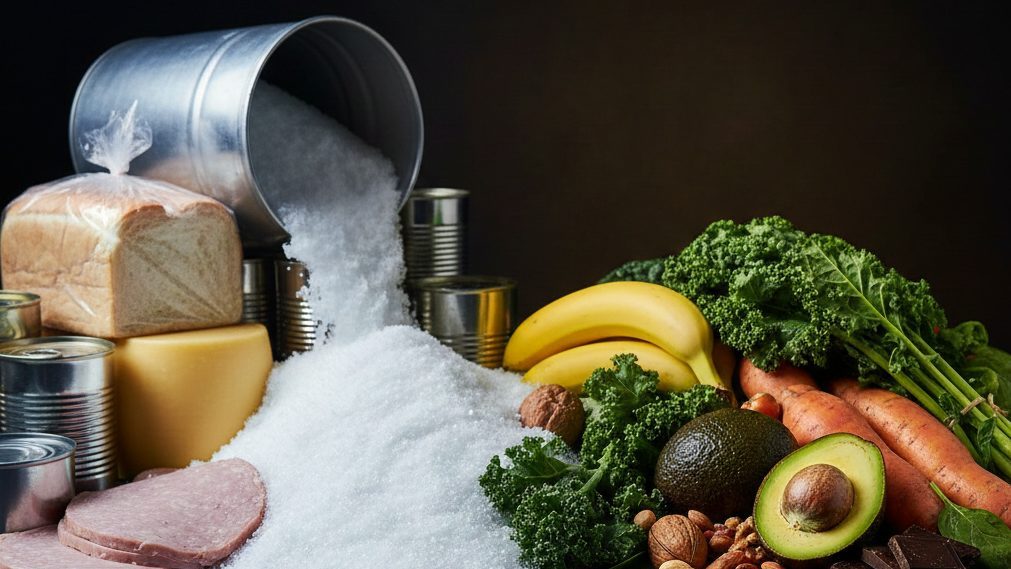
The article analyzes the problem of excessive salt intake in the modern diet, where the average Czech consumes three times the WHO recommended amount, with 75–80% of sodium coming from processed foods. It examines the scientific evidence on the health risks of excess sodium and deficiency of potassium and magnesium, including key studies such as SSaSS, and exposes the lobbying strategies of the salt industry, which systematically casts doubt on regulation much as the sugar and tobacco industries did before it.
The average Czech eats around 13 grams of salt per day — some older estimates from the Ministry of Health put it as high as 15–16 grams. Even the lower figure is almost three times what the World Health Organization recommends, and more than twenty times the physiological minimum the body actually needs. But the problem is not just the quantity. Our Paleolithic ancestor took in sodium and potassium at a ratio of roughly 1:16. The modern Western diet has completely reversed this ratio — to about 1.36:1 in favour of sodium. This shift is not the work of nature or of individual choice: it is the work of the food industry, which finds in salt an exceptionally cheap tool for boosting profits, and which lobbies systematically against any regulation.
This article summarizes the current state of knowledge on the mineral trio sodium–potassium–magnesium: from physiology through clinical evidence and industry strategies to regulatory failure. It draws on primary sources — Cochrane reviews, randomized trials (SSaSS, DASH-Sodium, TOHP), meta-analyses, and documents from regulatory bodies.
The physiological minimum of sodium needed to maintain internal balance is only about 230 mg per day, that is roughly 0.6 g of salt. The European Food Safety Authority (EFSA) set the safe and adequate intake at 2 g of sodium per day, that is 5 g of salt — the same as the WHO recommends. The American Heart Association (AHA) is stricter: it sets the ideal intake below 1.5 g of sodium (3.75 g of salt). Czech recommendations are aligned with the WHO.
The reality is entirely different. The average salt intake in the Czech Republic reaches roughly 13 grams per day — probably more in men, around 10 g in women. The Czech Republic is among the countries with the highest salt intake in Europe, just behind Hungary (an average of roughly 14–15 g, up to 17.5 g in men) and alongside Slovenia (also around 13 g). The global average is 10.8 g per day, that is more than twice the recommendation. At the same time, 75–80 % of all sodium consumed comes from processed foods — bread and baked goods, cured meats, cheeses, and ready meals — not from salting at home.
A Cochrane review (He et al., BMJ 2013), based on 34 randomized trials, demonstrated that reducing salt by roughly 4.4 g per day leads to a fall in systolic pressure of 4.18 mmHg and diastolic of 2.06 mmHg. In hypertensive patients the effect is even more pronounced (–5.39 mmHg systolic). An umbrella review of 21 meta-analyses from 2025 quantified the risks: every additional 1 g of sodium raises the risk of cardiovascular disease by 4 % and of stroke by 6 %. According to the Global Burden of Disease study (2021 edition), excessive salt intake is associated worldwide with roughly 1.9 million deaths per year — older estimates from 2013 using a broader definition cited up to 3.7 million.
The single strongest randomized evidence came from the SSaSS study (Neal et al., NEJM 2021). In 20,995 participants in China, it showed that simply replacing 25 % of table salt with potassium chloride reduced the incidence of stroke by 14 %, of major cardiovascular events by 13 %, and of all-cause mortality by 12 % — without an increased risk of excessive blood potassium levels. The study was funded independently by the Australian National Health and Medical Research Council (NHMRC).
The debate over the optimal sodium intake is not closed. The PURE study (Mente, O'Donnell et al.; Lancet 2016, 2018) described, in more than 100,000 people from 21 countries, a so-called J-shaped curve: the lowest cardiovascular risk at an intake of 3–5 g of sodium per day, with elevated risk both above 5 g and below 3 g. The authors argue that very low sodium intake activates the renin-angiotensin-aldosterone system, which may paradoxically increase mortality.
Critics (among others Cappuccio et al., Current Nutrition Reports 2022), however, point to serious methodological shortcomings. PURE used a single spot sample of morning urine to estimate 24-hour sodium excretion using the Kawasaki formula — a method widely criticized as systematically biased. Three cohorts using the gold standard (repeated 24-hour urine collections, including the TOHP study) demonstrated a direct linear relationship between sodium and cardiovascular disease — no J-shaped curve. Further objections include regression dilution bias and reverse causation: sick people eat less, have lower sodium intake, but higher mortality.
The PURE study itself was funded by academic and governmental sources, not directly by the salt industry. Nevertheless, some researchers on the "pro-salt" side of the debate had demonstrable ties to industry. Michael Alderman of the Albert Einstein College was a member of the scientific advisory board of the Salt Institute (1995–2005). David McCarron was a paid consultant to both the Salt Institute and the Grocery Manufacturers Association; an investigation by BuzzFeed News (2017) revealed that McCarron initially failed to disclose his industry ties on his conflict-of-interest form.
An honest assessment: most of the evidence from randomized trials supports a reduction in blood pressure at lower sodium intake. The J-shaped curve comes primarily from observational studies with methodological limitations. The precise lower threshold of benefit, however, remains a matter of debate, and the PURE study raises legitimate questions about extremely low targets for people with normal blood pressure.
The WHO recommends a potassium intake of at least 3,510 mg per day; EFSA set the adequate intake at 3,500 mg. Actual intake in most populations is markedly lower — in the USA an average of roughly 2,500 mg, in the Czech Republic probably similarly inadequate: only 25 % of Czechs eat vegetables daily and only 8 % meet the recommendation of five servings of fruit and vegetables.
A key finding of recent years is that the sodium-to-potassium ratio (Na:K) predicts cardiovascular risk better than the intake of either mineral alone. The Tehran study (Mirmiran et al., BMC Public Health 2023), with a median follow-up of 10.6 years, demonstrated that a higher Na:K ratio is an independent predictor of cardiovascular disease, with a hazard ratio of 1.99. A meta-analysis of 15 randomized trials (Binia et al., J Hypertens 2015) showed that potassium supplementation reduces systolic pressure by 4.7 mmHg. The meta-analysis by D'Elia et al. (JACC 2011), encompassing roughly 250,000 people, demonstrated that increasing potassium intake by 1.64 g per day reduces stroke risk by 21 %.
The problem is that processed foods systematically add sodium and remove potassium — refining grains, removing plant matter, and adding salt as a preservative and flavour enhancer results in a modern diet that is essentially "high-sodium, low-potassium."
The recommended daily intake of magnesium is 420 mg for men and 320 mg for women. The reality is alarming: roughly 2.4 billion people worldwide (about 31 % of the world's population) fail to meet this intake. In the USA 48–57 % of the population consumes less magnesium than recommended, in China 64 %. Subclinical deficiency affects up to a third of the general population, but the true figure may be higher, because serum magnesium (containing less than 1 % of the body's magnesium) is a poor diagnostic marker.
Magnesium is an essential cofactor of the sodium-potassium pump (Na⁺/K⁺-ATPase) present in virtually every cell. This pump requires Mg-ATP as its energy substrate to transport 3 Na⁺ ions out and 2 K⁺ ions into the cell. Without sufficient magnesium, pump function is impaired, leading to loss of potassium inside cells, overload with sodium and calcium, and electrical instability — cardiac rhythm disturbances, muscle cramps, and high blood pressure. Clinically crucial is the fact that magnesium deficiency causes a refractory potassium deficit — potassium supplementation alone cannot correct its deficit if magnesium is lacking.
DiNicolantonio et al. (Open Heart 2018) labelled subclinical magnesium deficiency "a principal driver of cardiovascular disease and a public health crisis." The health consequences of deficiency include type 2 diabetes, metabolic syndrome, high blood pressure, atherosclerosis, sudden cardiac death, osteoporosis, migraines, and asthma.
Paleolithic humans consumed an estimated roughly 500–700 mg of sodium and 7,400–11,000 mg of potassium per day. Magnesium intake reached approximately 800–1,100 mg. Frassetto et al. (Eur J Nutr 2001) described this change as a "post-agricultural inversion of the potassium-to-sodium ratio." Palmer and Clegg, in Mayo Clinic Proceedings (2016), pointed out that the interplay of sodium excess and potassium deficiency, rather than either disturbance alone, is the critical environmental factor in the development of high blood pressure.
The global salt market reached a value of USD 25.98 billion in 2024, with projected growth to USD 36.12 billion by 2032. Annual production exceeds 300 million tonnes. The market is relatively fragmented — the ten largest players control only about 15.5 %. The leading position is held by Cargill (about 6.5 % of the market), followed by Germany's K+S AG (about 3.2 %, which owns Morton Salt), China's CNSIC, and the American Compass Minerals.
The Salt Institute (founded in 1914, dissolved in March 2019) was the principal lobbying organization of the American salt industry. Under the leadership of president Dick Hanneman it systematically challenged government efforts to limit sodium intake. The Institute sued the U.S. Department of Health over its anti-sodium campaigns, called the recommended limits "unnaturally low," and claimed that reducing sodium "would make our food less safe." In 2016 it publicly opposed the voluntary guidelines of the U.S. Food and Drug Administration (FDA) on sodium reduction.
Michael Jacobson, co-founder of the Center for Science in the Public Interest (CSPI), responded to the Institute's demise by stating that in all 30 years he had watched it, the Salt Institute had done nothing but "muddy the waters around salt and health."
The salt industry's strategy mirrors the well-documented practices of the sugar industry: funding research that challenges health risks, amplifying uncertainty, and lobbying against regulation. The International Life Sciences Institute (ILSI) funded supplements in JACN whose authors were linked to industry (Campbell Soup, Frito-Lay, Heinz, Kraft). Cappuccio et al. (2022) analyzed eight articles in the European Heart Journal (2020–2021) challenging salt reduction and concluded that, according to their analysis, some researchers, often with industry funding, continue to publish such claims without responding to the numerous objections.
The BMJ (2019) documented how tobacco companies (R. J. Reynolds, Philip Morris), after acquiring food companies, transferred marketing strategies to processed foods. A study in the BMJ (2023) demonstrated that highly industrially processed foods with precise combinations of sugar, salt, and fat activate dopamine reward pathways similar to nicotine.
Salt serves the food industry as an exceptionally cheap, multipurpose tool. As a flavour enhancer it increases the perception of a product's thickness, intensifies sweetness, masks metallic and chemical off-flavours, and allows the use of cheaper ingredients. As a preservative it lowers water activity and extends shelf life. As a thirst-inducer it demonstrably increases beverage sales: He, Marrero, and MacGregor (Hypertension 2008) demonstrated in 1,688 British children that each additional 1 g of salt is associated with consuming 27 g more sugar-sweetened drinks. Grimes et al. (Am J Clin Nutr 2013) confirmed in 6,400 American children: +1 g of salt = +32 g of sugar-sweetened drinks per day. Salt also increases a product's weight — chicken and other products are injected with brine to retain moisture.
In the USA and Europe more than 70–75 % of sodium comes from processed and restaurant foods. Only about 14 % is naturally present in foods and roughly 11 % is added during cooking. In European countries bread and baked goods account for 25–40 % of total salt intake.
Himalayan pink salt contains 95–98 % sodium chloride and roughly 2 % trace minerals. An analytical study by Flannery et al. (Foods 2020) found higher levels of calcium, iron, and magnesium compared with table salt — but in clinically entirely insignificant amounts. To obtain the daily dose of potassium from Himalayan salt one would have to eat 1.7 kg of salt. One sample exceeded the maximum permissible limit for lead contamination. The sodium content is practically identical: roughly 368 mg/g compared with 381 mg/g for table salt. Moreover, specialty salts usually do not contain iodine — unlike iodized table salt, which is a genuine public health measure. The market for gourmet salts nonetheless reaches a value of USD 1.35 billion (2024).
Salty taste is mediated chiefly by epithelial sodium channels (ENaC) — membrane ion channels selectively permeable to Na⁺. On contact with NaCl, sodium ions flow through ENaC into the taste cell, cause depolarization, and trigger the release of a transmitter (ATP) through CALHM1/3 channels.
There are two distinct pathways of salt perception. Low concentrations (below 150 mM) are mediated by ENaC, are selective for sodium, and elicit an attractive (appetitive) response — an evolutionary mechanism ensuring sufficient intake of a scarce mineral. High concentrations (above 150 mM) engage receptors for bitter and sour taste and activate the nerve endings of the trigeminal nerve, thereby eliciting an aversive response — a warning mechanism against overly concentrated solutions.
The appetite for salt is innate — it is the only proven innate drive mechanism for obtaining a specific nutrient (apart from thirst). The mesolimbic dopamine system drives the craving for salt. Evolutionarily, this system developed in an environment of minimal sodium intake (roughly 500 mg per day). The current consumption of about 3,400–5,200 mg per day has no evolutionary precedent.
Taste cells turn over roughly every 10–14 days, which forms the biological basis for adaptation. The landmark study by Bertino, Beauchamp, and Engelman (Am J Clin Nutr 1982) demonstrated that after adopting a low-sodium diet significant changes in preference appeared after 8 weeks. Blais and Pangborn (Am J Clin Nutr 1986), in a 12-month study, recorded a gradual decline in the preferred salt concentration in soup from 0.76 % to 0.33 % NaCl — a 54 % reduction after 24 weeks.
The SWaP-HTN study (Chung et al., ESC Congress 2022), with 29 adults with high blood pressure, showed that a 16-week program of gradual adaptation led to a reduction in sodium intake of 1,158 mg per day (30 %), while satisfaction with the low-salt diet rose from 4.8 to 6.5 out of 10 points. Most participants removed the salt shaker from the table within 3 weeks. It works in the opposite direction too: Bertino et al. (Physiol Behav 1986) demonstrated that adding salt for as little as 4 weeks increases preference.
A crucial finding for the food industry is that a gradual reduction in salt of 10–15 % is imperceptible to consumers. Depending on the food category, 15–25 % of salt can be removed without reformulation if the steps are spread out over time. In cereals a cumulative reduction of up to 47 % (1992–2015) was achieved without perceptible customer resistance.
Potassium chloride (KCl) is the most widely used substitute — replacing 25–35 % of NaCl is palatable; at higher proportions a bitter and metallic off-flavour appears. Masking techniques include adding sugars, kappa-carrageenan, umami flavour compounds, and yeast extracts.
Advanced approaches include arginyl dipeptides, which enhance salty taste via ENaC channels, or L-lysine, which effectively masks the bitterness of potassium ions. Disodium succinate enabled a salt reduction of more than 24 % without a fall in perceived saltiness. In bread with partial replacement of NaCl by KCl, yeast extract enabled a 67 % reduction in sodium (Bolhuis et al., 2011).
Further approaches include micronizing salt crystals (MicroSalt technology — particles 100× smaller that dissolve on the tongue instantly, enabling a 50 % sodium reduction), microencapsulation (uneven distribution of salt in a product increases the perception of saltiness), and seaweed (naturally rich in glutamic acid and minerals).
The British program led by the organization CASH since 2003 under the auspices of the Food Standards Agency (FSA) is considered one of the most successful in the world. The program set voluntary but strictly monitored targets for more than 85 food categories.
In baked goods the average salt content fell from 1.23 g/100 g (2001) to 0.98 g/100 g (2011) — a fall of roughly 20 %. In 2001 only 28 % of products met the target of no more than 1.0 g/100 g; by 2011 it was 71 %. Total salt intake in the population fell from 9.5 g per day (2003) to 8.1 g (2011) — a 15 % reduction measured by 24-hour urine collection. Estimates speak of roughly 9,000 cardiovascular deaths averted per year and savings of more than GBP 1.5 billion per year for the British National Health Service (NHS).
Cautionary, however, is the trajectory after 2011, when responsibility for the program was transferred from the independent FSA to the food industry through the so-called "Responsibility Deal" of Minister Lansley. Progress stalled, and salt intake rose back to 8.39 g per day by 2018. The British National Institute for Health and Care Excellence (NICE) estimated that the four lost years cost roughly 6,000 averted deaths.
Finland began a systematic fight against salt in 1970 as part of the North Karelia Project. The approach combined mass media campaigns, cooperation with industry, mandatory warning labels on high-salt foods (from 1993 — the first in the world), and the promotion of mineral salts.
The results: salt intake fell from roughly 14 g per day (1972) to less than 9 g (2002) — a reduction of 36–40 %. The population's blood pressure fell by more than 10 mmHg both systolic and diastolic. Mortality from cardiovascular disease fell by 75–80 % and life expectancy increased by roughly 13 years. A 2025 study nonetheless warns that progress has stagnated since the early 2000s — a reminder that even successful programs require sustained political pressure.
South Africa became in 2013 the first country with comprehensive mandatory regulation of sodium content — the legislation covers 13 food categories with specific maximum limits (baked goods: 400 mg Na/100 g from 2016, stricter limits from 2019). Modelling showed that these measures could prevent 7,000 cardiovascular deaths and 4,000 non-fatal strokes per year.
The Czech Republic consumes more salt than most of Europe — for comparison: Germany is at a level of 6–7 g per day, Austria 8–9 g, that is markedly less than the Czech average. At the same time 80 % of Czech infants receive more salt than recommended; 95 % of toddlers are over-salted.
The key piece of legislation is Decree No. 18/2020 Sb. (Ministry of Agriculture), which sets requirements for milling, bakery, and confectionery products — but does not set a specific maximum limit for salt in baked goods in the way that the United Kingdom or South Africa does. A study by the National Institute of Public Health (around 2019), analyzing 100 bakery products from the largest chains, found an elevenfold difference in salt content between the highest and lowest product.
The Czech Republic adopted the National Salt Reduction Program 2023–2030 ("30 % by 2030") in line with the WHO goal. However, binding reformulation targets for the food industry are missing. Czech experts point out that voluntary agreements with the food industry on salt reduction do not work in practice.
Salt fulfils four key technological roles in baked goods: flavour, gluten structure (it strengthens and tightens the gluten network), control of fermentation, and crust colour. Research shows that bread can be made with as little as 0.3–0.6 % NaCl by flour weight without significant differences in volume and moisture. A systematic review by Jaenke et al. (Crit Rev Food Sci Nutr 2017) confirmed that salt can be reduced in bread by up to 40 % without a significant impact on consumer acceptability; a reduction of 10 % is entirely undetectable.
The WHO set a global target of a 30 % relative reduction in salt intake by 2025 (extended to 2030). Salt reduction is classed among the so-called best buys — a return of USD 12 for every USD 1 invested. Yet no country has so far achieved the 30 % target. Only 5 % of WHO member states have comprehensive mandatory sodium reduction policies.
A systematic review by Hyseni et al. (PLOS ONE 2017) established a clear ranking of effectiveness: mandatory reformulation targets are most effective, followed by voluntary reformulation with government monitoring, front-of-pack labelling, mass media campaigns, and taxation. Multi-component strategies work best — countries combining reformulation, labelling, campaigns, and monitoring achieve the greatest reductions.
In the EU the food industry spent over EUR 1 billion on campaigns against mandatory colour labels (so-called traffic lights). A unified mandatory front-of-pack label proposed in the Farm to Fork Strategy (2020) has so far not been adopted — the process is blocked by industry lobbying. The organization FoodDrinkEurope is pushing a weaker NutrInform Battery system over the Nutri-Score system.
In the USA members of Congress repeatedly blocked the FDA's progress towards sodium reduction guidelines through budget riders for almost five years (2016–2021). The Penn LDI estimates that introducing the targets could prevent 450,000 new cases of cardiovascular disease and save USD 41 billion over 20 years.
EuSalt (the European Salt Producers' Association) in 2011 sharply opposed labelling requiring a salt declaration in the EU and called the new rules "absurd." When advertising for foods high in salt, fat, and sugar was banned on London public transport (2019), food companies deployed direct lobbying, coalition-building, downplaying of benefits, and the threat of legal action — tactics that researchers from the University of Bath identified as mirroring the strategies of the tobacco and alcohol industries.
If the previous section is about industry and politics, this chapter explains why sodium matters so much from the standpoint of bodily processes. The kidneys are the only organ capable of regulating the sodium balance over the long term — and thereby determining the "set point" of blood pressure.
The kidneys filter roughly 180 litres of ultrafiltrate per day (glomerular filtration of about 120 ml/min). At a plasma sodium concentration of about 140 mmol/l the daily filtered sodium load amounts to about 25,200 mmol. Of this amount only 100–200 mmol per day is excreted in the urine. The fraction of excreted sodium is thus only about 0.5–1.0 % — even the smallest disturbance of this balance leads to sodium retention, expansion of fluid volume, and high blood pressure.
Reabsorption proceeds in stages. The proximal tubule reabsorbs roughly 65 % of filtered sodium — on the apical side the NHE3 exchanger (Na⁺/H⁺) predominates, on the basolateral side the Na⁺/K⁺-ATPase, which consumes roughly 50 % of these cells' metabolic fuel. The thick ascending limb of the loop of Henle reabsorbs roughly 25 % via the NKCC2 transporter — the target of loop diuretics (furosemide); its mutations cause Bartter syndrome. The distal convoluted tubule reabsorbs roughly 5–10 % via NCC — the target of thiazide diuretics. In the collecting duct, final fine-tuning is provided by the ENaC sodium channel (roughly 2–5 %), the key executor of aldosterone's effects. Gain-of-function mutations of ENaC cause Liddle syndrome (severe high blood pressure).
Arthur Guyton in 1991 formulated a theory according to which the kidney is the cause of "all chronic high blood pressure." His mathematical model from 1972, containing 354 functional blocks in the FORTRAN programming language, integrated pressure natriuresis and flow autoregulation into a coherent systemic model.
The key prediction: an increase in peripheral resistance without a change in renal function leads only to a transient rise in pressure — sustained high blood pressure occurs solely with a rightward shift of the renal function curve, that is, a need for higher pressure to excrete the same amount of sodium.
The strongest evidence is provided by cross-transplants in Dahl rats. Transplanting a kidney from a salt-sensitive rat into a salt-resistant recipient transferred high blood pressure to the recipient, and vice versa. Morgan et al. (Hypertension 1990) quantified it: a mean arterial pressure of 145 ± 5 mmHg compared with 103 ± 2 mmHg on a high-salt diet.
In humans, Curtis et al. (NEJM 1983) described six patients with essential high blood pressure who, after kidney transplantation from normotensive donors, achieved normalization of blood pressure. Guidi et al. (JASN 1996) found that recipients of kidneys from "hypertensive families" required 10× more antihypertensive medication.
Keller et al. (NEJM 2003), in an autopsy study, found that individuals with high blood pressure had a median of 702,379 glomeruli per kidney compared with 1,429,200 in normotensive individuals — that is, roughly 50 % fewer nephrons, but with markedly larger glomeruli indicating compensatory hypertrophy. The normal number of nephrons varies enormously: from roughly 210,000 to more than 2,000,000 per kidney.
Salt sensitivity of blood pressure is defined as an increased reactivity of blood pressure to changes in sodium intake. It is a continuously distributed trait (Gaussian distribution), not a two-group category — the division into "salt-sensitive" and "salt-resistant" is artificial.
The overall prevalence is roughly 25 % in the general population and roughly 50 % in patients with high blood pressure. In African Americans the prevalence reaches roughly 73 % of hypertensive patients — the causes include a lower number of nephrons, lower plasma renin activity, and an altered renal dopamine system. Salt sensitivity increases progressively with age. Heritability reaches up to 74 %.
Monogenic forms of salt-sensitive high blood pressure — Liddle syndrome (ENaC mutation), Gordon syndrome (mutations of WNK1/4, CUL3, KLHL3), and the syndrome of apparent mineralocorticoid excess — represent the extreme manifestations. At the level of epigenetic changes, prenatal programming plays a role: inadequate maternal nutrition induces aberrant methylation of the AT1a receptor in the fetal hypothalamus. Exposure to bacterial toxins during pregnancy leads to transgenerational salt-sensitive hypertension detectable even in the F4 and F5 generations.
DASH-Sodium (Sacks et al., NEJM 2001): in 412 adults the combined effect of the DASH diet and low sodium led to a fall in systolic pressure of 7.1 mmHg in normotensive individuals and 11.5 mmHg in hypertensive individuals.
TOHP I and II (Cook et al., BMJ 2007): sodium reduction in prehypertensive individuals, with 24–26 years of follow-up, demonstrated a 25 % reduction in cardiovascular risk (hazard ratio 0.75; 95 % confidence interval 0.57–0.99). A direct linear relationship between sodium excretion and mortality — no J-shaped curve when using repeated 24-hour urine collections.
INTERSALT (BMJ 1988): an international cross-sectional study in 10,079 people from 52 populations: four isolated populations with a Na⁺ intake of less than 1–3 g of salt per day showed practically zero prevalence of high blood pressure and no rise in pressure with age.
The traditional two-compartment model (intracellular + extracellular) assumed that all body sodium is osmotically active. Jens Titze and colleagues demonstrated that sodium is stored in the skin and interstitial tissue bound to glycosaminoglycans — without a corresponding retention of water. The Na⁺ concentration in skin reaches 180–190 mmol/l compared with roughly 140 mmol/l in plasma.
The Mars500 study, in 12 men during a simulated flight to Mars, recorded that total body sodium fluctuated by ±200–400 mmol without concurrent changes in body weight — and Na⁺ excretion showed slow cyclical rhythms independent of intake. Salt-resistant Dahl rats have a threefold greater capacity to store sodium non-osmotically.
An important ongoing debate: Thowsen et al. (J Physiol 2022) from the Wiig group challenged the glycosaminoglycan-binding model and proposed that Na⁺ moves into the intracellular compartment. The question of the mechanism remains actively debated.
Machnik et al. (Nature Medicine 2009) described a breakthrough mechanism: macrophages in the skin detect the increased sodium concentration via the transcription factor TonEBP/NFAT5 and activate the production of the vascular growth factor VEGF-C. This induces the formation of new lymphatic vessels — increased lymphatic clearance of Na⁺ from the interstitial tissue. Depletion of macrophages leads to salt-sensitive high blood pressure.
On the adaptive immunity side, Kirabo et al. (J Clin Invest 2014) from the Harrison group identified that Na⁺ enters dendritic cells via ENaC, induces a calcium flux, activation of NADPH oxidase, the formation of highly reactive isolevuglandins, which create new antigens, activation of T lymphocytes, a shift towards Th17, production of interleukin IL-17A, and damage to the vascular lining. Transfer of dendritic cells from hypertensive mice to naive recipients induced high blood pressure.
Wilck et al. (Nature 2017) demonstrated that a high-salt diet in mice selectively eliminates Lactobacillus murinus, which converts tryptophan into indoles that inhibit the differentiation of Th17 cells. Elimination of this strain leads to a rise in Th17, production of IL-17, and salt-sensitive high blood pressure. Oral administration of L. murinus prevented salt-induced high blood pressure. In a preliminary human study, a 14-day high-salt diet led to a significant fall in Lactobacillus spp. and a rise in Th17.
The kinases WNK1 and WNK4 phosphorylate the downstream kinases SPAK/OSR1, which directly phosphorylate NCC and NKCC2. Negative regulation is provided by the E3 ubiquitin ligase CUL3-KLHL3. A breakthrough discovery is that the WNK kinases function as sensors of molecular crowding and form biomolecular condensates that regulate cell volume via phase separation (Boyd-Shiwarski et al., Cell 2022).
As the number of functioning nephrons falls, the total filtered sodium load decreases. The remaining nephrons increase single-nephron filtration and the fraction of excreted sodium as a compensatory adaptation — maintaining sodium balance, but at the cost of increased blood pressure. At a filtration rate below 30 ml/min (stage 4 chronic kidney disease) the compensatory mechanisms are overwhelmed.
The CRIC study (JASN 2016) in 3,939 patients with chronic kidney disease demonstrated that the highest quartile of sodium excretion was associated with a hazard ratio of 1.54 for worsening of kidney disease and 1.45 for all-cause mortality. A crucial finding: high sodium intake weakens the antiproteinuric effect of blockade of the renin-angiotensin-aldosterone system. Slagman et al. demonstrated that adding a low-sodium diet to an ACE inhibitor reduced urinary protein significantly more than adding an ARB (dual RAAS blockade) — sodium restriction is therefore more effective than intensifying treatment.
The KDIGO 2021 and KDIGO 2024 recommendations set a sodium intake below 2 g per day in patients with chronic kidney disease — grade of recommendation 2C (weak recommendation, low quality of evidence). A critical shortcoming is the absence of randomized trials assessing hard renal outcomes specifically in this group of patients.
Guyton's claim that no chronic high blood pressure can exist without an impairment of renal excretory function is challenged from three directions.
Osborn (Exp Physiol 2009) argued that the sympathetic nervous system can maintain chronic high blood pressure independently of renal mechanisms. Kurtz et al. (Hypertension 2018) tested two derivations of Guyton's model against human data and found that neither correctly predicted changes in sodium balance. Beard (Hypertension 2018) labelled Guyton's "laws" tautological — true by definition and unfalsifiable.
Evans et al. (Am J Physiol Regulatory 2017) therefore proposed a "neo-Guytonian schema": both impairment of renal excretion and altered systemic vascular regulation are co-contributors to most forms of high blood pressure. Schmidlin et al. showed that salt-sensitive and salt-resistant individuals have a similar increase in cardiac output on a high-salt diet — the key difference is a failure of vascular distensibility in the salt-sensitive, which points primarily to a vascular disorder.
Clinical trials of renal denervation confirm the causal role of the sympathetic nervous system: the SPYRAL HTN-ON MED trial demonstrated, after 36 months, a difference of –5.9 mmHg in ambulatory diastolic pressure and –11.8 mmHg in nocturnal systolic pressure in favour of denervation. The ESC 2024 guidelines recognize renal denervation as an adjunctive treatment for refractory high blood pressure.
The main gaps in current knowledge: a reliable clinical test of individual salt sensitivity is lacking, randomized trials assessing hard outcomes of sodium restriction in chronic kidney disease are lacking, and we insufficiently understand the causal mechanism linking tissue Na⁺ stores to cardiovascular risk.
New research directions include single-cell RNA sequencing in the kidneys (identification of the DCT1 and DCT2 subtypes, macula densa cells), spatial transcriptomics, proteomics of sodium transporters, and urinary exosomal miRNA as possible markers of salt sensitivity. The concept of digital twins combining ²³Na-MRI, bioimpedance analysis, and an individual RAAS profile represents the future of personalized sodium therapy.
The evidence base is unambiguous on several key points. Excessive sodium intake combined with inadequate intake of potassium and magnesium represents one of the most significant modifiable risk factors for cardiovascular disease — with a global impact of roughly 1.9 million deaths per year (GBD 2021 estimate). The Na:K ratio is more predictive than sodium intake alone. Adaptation of taste to a lower salt content occurs over 2–3 months, and a gradual reduction of 10–15 % is imperceptible to consumers.
At the level of bodily processes the picture is more complex than textbooks recently stated. Guyton's theory of the central role of the kidneys remains valid in its fundamentals, but the evidence for a third sodium compartment in the skin, the role of the immune system, the gut microbiota, and neural mechanisms rewrites the simplified schema "sodium = water = volume = pressure" into a more complex reality in which sodium also functions as a signalling molecule.
The Czech Republic finds itself in a paradoxical situation: it is among the countries with the highest salt intake in Europe, yet it has no mandatory limits for salt content in foods. The National Program "30 % by 2030" is a step in the right direction, but without binding reformulation targets it risks repeating the British scenario after 2011. International experience shows that mandatory approaches (Finland, South Africa, Portugal) outperform voluntary ones.
The most important lesson is systemic: the problem is not only salt. It lies in the overall disruption of the mineral balance of the modern diet, in the historically unprecedented inversion of the sodium-to-potassium ratio, in the widespread deficiency of magnesium, and in a food system that actively maintains these imbalances for commercial reasons. The solution requires not only the regulation of salt, but a fundamental shift away from highly industrially processed foods towards whole plant sources.
Methodological note: This article draws on Cochrane reviews, randomized clinical trials (SSaSS, DASH-Sodium, TOHP, INTERSALT), meta-analyses, and documents of regulatory bodies (WHO, EFSA, KDIGO). The main disputes (the J-shaped curve, Guyton's theory) are presented from both sides of the debate. Data cut-off: February 2026.
Transparency of creation
The conception, structure, and editorial line of the article are the work of the author, who prepared the content outline, established the key theses, and directed the entire creative process. Generative AI (Claude Opus 4.6, Anthropic) was used as a tool for research, fact-checking, and elaborating the author's draft.
The author verified the key findings and approved the final wording. No part of the text was published without conscious authorial oversight. The factual data were verified against the publicly available sources cited in the text.
This procedure complies with the transparency principles of EU Regulation 2024/1689 (AI Act). #poweredByAI
Read the Czech original on Médium.cz.
AI · Claude — machine translation, may contain inaccuracies.