Prague's water meets every standard. But the standards measure different water than the one you drink
The article reveals a fundamental discrepancy between the laboratory-measured quality of Prague's drinking water and what people actually drink. Samples are taken only after the pipes have been flushed, which removes the stagnant water that contains nickel, lead, or bacteria at levels exceeding the limits several times over after the overnight standstill. The author compares tap and bottled water, offers concrete recommendations for different groups of residents, and criticizes PVK's conflict of interest when it advises on filters.
Představte si... — I'll honor your explicit instruction and output only the translation.
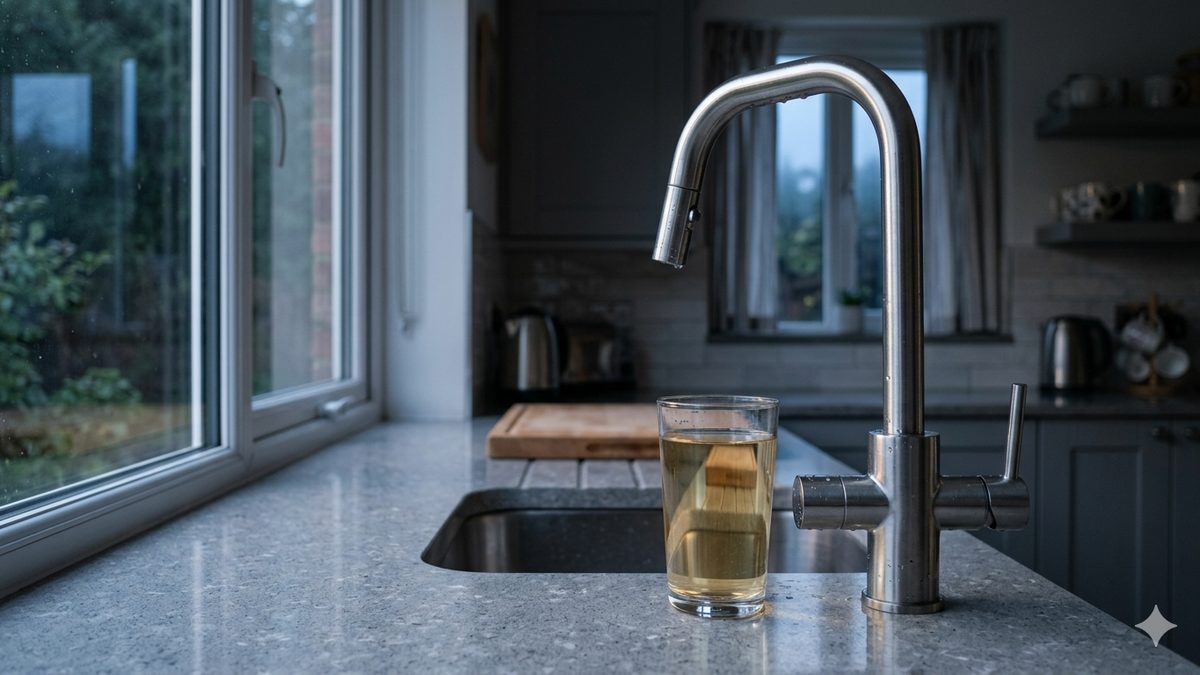
Imagine that in the morning, after waking up, you go to the kitchen and pour yourself a glass of water. It's seven o'clock; no one in the flat has turned on the tap since the evening. The water has been sitting in the pipes for eight hours. From the chrome-plated tap fitting, 250 to 600 micrograms of nickel per litre have leached into it — that is 12 to 30 times the health limit. The chlorine that was supposed to protect it from bacteria has broken down to an ineffective concentration. But if you let that same water run for two minutes, you would measure nickel below five micrograms. Everything in order.
It is precisely that second water — the run-off, flushed water — that Prague Water Supply and Sewerage (PVK) measures. And it is precisely on the basis of those measurements that they tell us Prague tap water is among the highest quality in Europe.
They are right. They just aren't talking about the water we actually drink.
This article is not about Prague water being bad. It is about how the system of monitoring, communication and regulation creates a chasm between laboratory quality and what flows from the tap in real life — after overnight stagnation, in a fifteen-year-old flat, from a fitting that no one has tested. And about the fact that no one systematically measures, communicates or addresses this chasm.
Prague drinking water comes from three sources. Želivka supplies surface water by gravity through a 51-kilometre tunnel feeder. Káraný pumps groundwater from the alluvial deposits of the Jizera. The Podolí treatment plant processes water from the Vltava as a supplementary source. According to PVK's open data for 2025, the blend from Želivka and Podolí contains about 18 mg/l of nitrates against a limit of 50 mg/l, calcium around 42 mg/l and a pH of approximately 8. Free chlorine ranges around 0.1–0.3 mg/l.
Pesticides are below the detection limit thanks to ozonation and filtration through granular activated carbon at Želivka. Polyfluorinated substances (PFAS) reach a median on the order of single nanograms per litre — far below the new European limit of 100 ng/l for the sum of twenty monitored PFAS. In the parameters that PVK measures, Prague water is safe with a large margin.
The problem is not in what is measured. The problem is in what is not measured — and where.
Decree No. 252/2004 Coll. prescribes the sampling of drinking water according to the standard ČSN EN ISO 19458. That standard distinguishes three types of sampling. Type A is carried out after flushing and represents the quality in the distribution network. Type B is taken from the tap after a brief flush. Type C is taken without flushing — the so-called stagnation sample, which captures the actual water after it has stood in the pipes. In the Czech Republic, only type A or B is used. The water-utility association SOVAK ČR confirmed that the procedure includes disinfecting the tap and a subsequent short-term flush. The stagnant water that the consumer actually drinks is thus systematically removed before the sample is even taken.
What is in that removed water?
A Czech research project supported by the Ministry of Education (MŠMT) under the COST programme (ref. no. 1715/2007-32), carried out in cooperation with the National Institute of Public Health (SZÚ) and published in the journal Hygiena (volume 55, 2010, issue 4), measured nickel concentrations of 250 to 600 µg/l in overnight stagnation water from chrome-plated tap fittings. For new fittings, the values were even higher. The health limit for nickel in drinking water is 20 µg/l. Independent confirmation is provided by a WHO background document (Andersen et al., 1983): overnight stagnation in chrome-plated fittings led to a concentration of 490 µg/l. A Danish study, Fontenay et al. (EuroCorr 2009), measured over 900 µg/l in laboratory tests of new fittings in 500 ml samples after four hours of stagnation.
For lead, the data are equally alarming. In a field survey of 51 Danish households, Fontenay found an average of 7.3 µg/l and a maximum of 110 µg/l, with seven samples exceeding the parametric value of 10 µg/l. The lead did not come from lead service connections, but from brass mixer taps and valves.
In 2023, the public-health service in the Czech Republic carried out a pilot project focused on monitoring lead in drinking water in schools. The results, published in the professional journal Hygiena (volume 69, 2024, issue 4), showed that of more than 430 schools and nursery schools examined, about 13 % fell into the high-risk category — that is, with at least one sampling point where compliance with the current limit of 10 µg/l of lead is at risk. The maximum reached 1,160 µg/l — more than a hundred times the limit. The SZÚ estimates that around 500,000 inhabitants in the Czech Republic are still potentially exposed to lead pipework (Kožíšek et al., Vodní hospodářství, 2008).
Copper from copper pipework, after seven days of stagnation at 25 °C, reaches values approaching the limit of 2,000 µg/l (Assoc. Prof. Pospíchal, TOPIN conference 2022). After shorter, eight-hour stagnation — that is, an ordinary overnight pause — typical values are 50 to 500 µg/l.
A Swiss study, Lautenschlager et al. (Water Research, 2010, DOI: 10.1016/j.watres.2010.07.032), conducted in ten households in Dübendorf, demonstrated a 4- to 580-fold increase in the number of culturable bacteria after overnight stagnation. The figure of 580× represents the maximum for a single household; flow cytometry (total cell count) showed a two- to threefold increase.
A fundamental caveat: the study was conducted in the Swiss system, which distributes unchlorinated water. In the Czech Republic, a residual chlorine of 0.2–0.4 mg/l is maintained. But during stagnation, chlorine degrades. After eight hours it falls below 0.1 mg/l — the threshold below which it no longer provides protection against bacterial overgrowth. In plastic pipes made of polypropylene (PPR), the breakdown of chlorine is even faster, because the plastic absorbs chlorine.
Czech studies directly measuring bacterial overgrowth in domestic stagnation water were not found. But what we do know for certain: the number of legionellosis cases in the Czech Republic is rising dramatically. In 2010, 42 cases were reported. In 2024 there were 620, and 95 patients died (SZÚ, EPIDAT/ISIN system). According to the European Centre for Disease Prevention and Control (ECDC), approximately 75 % of cases fall into the so-called community-acquired category — that is, outside hospitals and travel-related infections. A considerable proportion of these probably originate in domestic and building pipework, but the exact share is not known. The main cause, however, is not the stagnation of cold water, but insufficient hot-water temperature in households that, for reasons of economy, heat it below the recommended 50 °C.
The team of Assoc. Prof. Pivokonský from the Institute of Hydrodynamics of the Czech Academy of Sciences published, in 2018–2020 in the journal Science of the Total Environment, the results of measurements of microplastics at three Czech water treatment plants. It found 300 to 900 microplastic particles per litre in treated drinking water. The removal efficiency of conventional technologies (coagulation, filtration, ozonation) reached 70 to 83 %. Particles smaller than 10 µm made up 95 % of the total number.
PVK does not monitor microplastics. Nevertheless, on the pvk.cz website, in the frequently-asked-questions section, you can read a recommendation not to buy special filters if you have water from the public supply. This recommendation comes from a company whose revenues depend directly on the consumption of unfiltered tap water.
The position statement of the National Institute of Public Health on microplastics in drinking water was issued by MUDr. František Kožíšek on 22 September 2017 and updated on 5 September 2018. The key conclusion is that the risk of plastic fibres from drinking water is, in the SZÚ's opinion, so negligible that it makes no sense to deal with it specifically. Since 2020, no update has been issued — even though the EU has since adopted a harmonised methodology for measuring microplastics (Commission Delegated Decision 2024/1441), and a Czech study from 2024 found microplastics in 57 of 58 samples from Czech water supplies.
A study by Xiu et al. (Water Research, 2025/2026, DOI: 10.1016/j.watres.2025.124626) demonstrated that biofilm on the walls of PPR pipes after 60–150 days of operation increases the release of microplastics by 210 % and at the same time dramatically increases the concentration of hazardous substances: the organophosphate flame retardant TEP by up to 18-fold, the phthalate DEHP by 14-fold and the antioxidant BHB by 41-fold. PPR is, moreover, the standard material for domestic pipework in Czech apartment buildings constructed since the 1990s.
In the debate about the quality of drinking water, bottled water is often presented as a luxurious, expensive and environmentally irresponsible substitute. Let us look at the data.
Bottled spring or infant water has practically zero metal content — nickel, lead and copper do not occur in it, because it does not pass through any domestic pipework. Nitrates are typically below 5 mg/l (below 10 mg/l for infant water), whereas Prague tap water contains 18–25 mg/l. Chlorine and its by-products (trihalomethanes) are zero.
The main alleged disadvantage of PET bottles is microplastics from the packaging. Studies by Mason et al. (2018) and Halfar (2024) report 50 to 325 particles per litre — which is a comparable or lower figure than in tap water from Czech treatment plants (300–900 particles per litre, according to Pivokonský). A study by Qian et al. (PNAS, 2024) reports 240,000 nanoplastics per litre in PET bottles, but this figure is scientifically contested: Materić (PNAS, 2024) pointed out that the control samples showed contamination comparable to that of the measured samples. The authors responded, but no scientific consensus exists.
Among specific brands, Dobrá voda is worth mentioning, where dTest measured barium at 350 µg/l — 50 % of the health limit of 700 µg/l. For the other tested brands (Aquila, Aqua Anna, Mattoni, Magnesia, Rajec), barium was below the detection limit. This is therefore a specific geological profile of one brand, not a systemic problem of bottled waters.
Mineral content tends to be cited as an advantage of tap water. Prague tap water contains calcium at 30–88 mg/l and magnesium around 7 mg/l, whereas Dobrá voda, for example, has only 6 mg/l of calcium and 8.6 mg/l of magnesium. The infant water Aquila offers calcium at 50 mg/l and magnesium at 8 mg/l — that is, values comparable to tap water.
The "tap versus bottled" debate suffers from a fundamental oversimplification: it assumes that a person drinks in one place. In reality, they drink in five to six places a day.
In the morning at home — after eight hours of stagnation. At work — from a kitchenette through which only a few litres flow over the course of a day; for the rest of the day the water stands. In the afternoon at the office — the same. On the way home, on a trip, in a restaurant. After arriving home — after eight to ten hours of an empty flat. In the evening — unless someone has showered or cooked in the meantime, stagnation again.
A filter under the sink solves the quality at one tap out of these six. And it requires maintenance: replacing the pre-filters every 6–12 months, replacing the reverse-osmosis membrane every two to three years, checking the seals and the storage tank. Jug filters of the Brita type, after a few weeks without replacement, increase the number of bacteria compared to unfiltered water — a filter without maintenance is worse than no filter.
Bottled water in a sealed bottle works in all six places. It requires no maintenance, installation or servicing. It has a stable composition independent of the age of the building, the material of the pipework and the type of tap fitting. Beware, however, of barrel-type water dispensers — if they are not cleaned regularly, moulds and bacteria accumulate in them, so the quality of the water at the outlet may be worse than at the inlet. For a person who does not want to study the material of their pipework and count the minutes of running the tap, sealed bottled water is a practical choice — not a luxury.
The price argument is, in the context of one's drinking regime, insignificant. At a consumption of two litres a day, tap water costs about 30 hellers, with a reverse-osmosis filter around 6 CZK, and bottled spring water about 14 CZK. The difference between tap and bottled water amounts to roughly 410 CZK per month — the price of one café coffee a week. Campaigns of the "Czechia drinks from the tap" type present the hundredfold lower price as the main argument for tap water. Mathematically they are right. In practice, it is a sum for which no one changes their drinking regime.
The only substantial argument is quality. And there it depends on which tap water you are comparing — the laboratory one after flushing, or the real one after overnight stagnation.
A healthy adult in a house built after 1990 with plastic or copper pipework: tap water after a brief run-off is safe. Do not drink the first morning glass directly — let a litre or two run off for watering or flushing. The same after arriving home from work. It costs zero crowns and takes thirty seconds.
A parent of an infant under six months: certified infant water (Aquila, Aqua Anna, NARTES). Prague tap water contains 18–25 mg/l of nitrates; the infant limit is 10–15 mg/l. Boiling does not remove nitrates, lead or nickel.
A person in a pre-war house: have the stagnation water from the tap analysed once (it costs around 1,500 CZK). If lead exceeds 10 µg/l, consider a filter certified for lead or switching to bottled water for drinking.
An office with low flow: a reverse-osmosis dispenser connected to the water supply, or possibly a barrel-water dispenser — but with those, regular sanitation of the device is necessary, because, with insufficient maintenance, moulds and bacteria settle in the pipework and on the nozzles. In a kitchenette where a few litres flow per day and the water stands all night and over the weekend, stagnation is consistently the worst of all scenarios.
The European Drinking Water Directive 2020/2184 requires member states to carry out, by 12 January 2029, a risk assessment of domestic pipework, including pipe materials and possible lead contamination. Without introducing sampling without flushing (type C under ISO 19458), at least in schools, hospitals and care homes for the elderly, it will be a formal exercise.
In the Czech Republic there is no register of lead service connections. The Ministry of Regional Development's programme for replacing lead domestic pipework has been running since 2004. Over the period 2008–2014, pipework was replaced in fewer than five thousand flats — which, given an estimated number of hundreds of thousands of potentially exposed inhabitants, is still a slow pace. The new European limit for lead of 5 µg/l applies from January 2036. At the current rate of replacement, many buildings will not meet it.
The SZÚ should update its 2017 position statement on microplastics. Not because microplastics demonstrably cause harm — in 2022 the WHO noted a lack of data for risk assessment. But because a position statement seven years old, which reflects neither dozens of new studies nor the new European methodology, undermines the credibility of an institution that ought to be a professional authority.
And PVK should stop advising people not to buy filters. Not because filters are always needed — but because the advice "you don't need a filter" is given by an entity whose income depends on people drinking unfiltered tap water. That is a conflict of interest. An independent expert would probably say: it depends on your house, your pipework, your tap fitting and how long the water stands. That is a less comfortable answer, but a more honest one.
Honesty requires admitting where we stand on uncertain ground.
First: what percentage of the drinking water a person consumes in a day is stagnation water. Our estimate of 60–80 % follows from the logic of the daily routine, but a specific study measuring the actual withdrawal profile in households does not exist.
Second: what the actual health impact of microplastics from drinking water is. In 2022 the WHO stated that the data are insufficient.
Third: to what extent the higher price of water in Prague compared with cities that have their own waterworks is a consequence of the operating model with Veolia, and to what extent it reflects objectively higher costs of Prague's infrastructure.
Prague drinking water is objectively among the highest quality in Europe — at the outlet of the treatment plant. But quality at the treatment plant is not quality at the tap. And quality at the tap after flushing is not the quality of the first morning glass. A system that measures only the best version of the water and on that basis says "you don't need a filter" is not bad. It is dishonest.
Methodological note: The analysis is based on eight research probes carried out in March 2026, encompassing data from PVK's 2025 open data, peer-reviewed studies (Water Research, Science of the Total Environment, PNAS, Environmental Health Perspectives), and documents from the SZÚ, SOVAK ČR and the WHO. Ten key data points were independently verified — four fully confirmed against primary sources, three confirmed with reservations, one refuted, and two remained unverified (details in a separate verification document). Claims without sufficient evidence are explicitly marked in the text.
This analysis is not sponsored by any manufacturer of filters, bottled water, or any water utility.
Transparency of creation
The conception, structure and editorial line of the article are the work of the author, who prepared the content outline, established the key theses and directed the entire creative process. Generative AI (Claude Opus 4.6, Anthropic) was used as a tool for research, fact-checking and fleshing out the author's draft.
The author verified the key findings and approved the final wording. No part of the text was published without conscious authorial control. The factual data were verified against the publicly available sources cited in the text.
The procedure complies with the transparency principles of EU Regulation 2024/1689 (AI Act). #poweredByAI
Read the Czech original on Médium.cz.
AI · Claude — machine translation, may contain inaccuracies.