Five Beers Won't Dehydrate You. Concentration Is What Matters, Not the Count
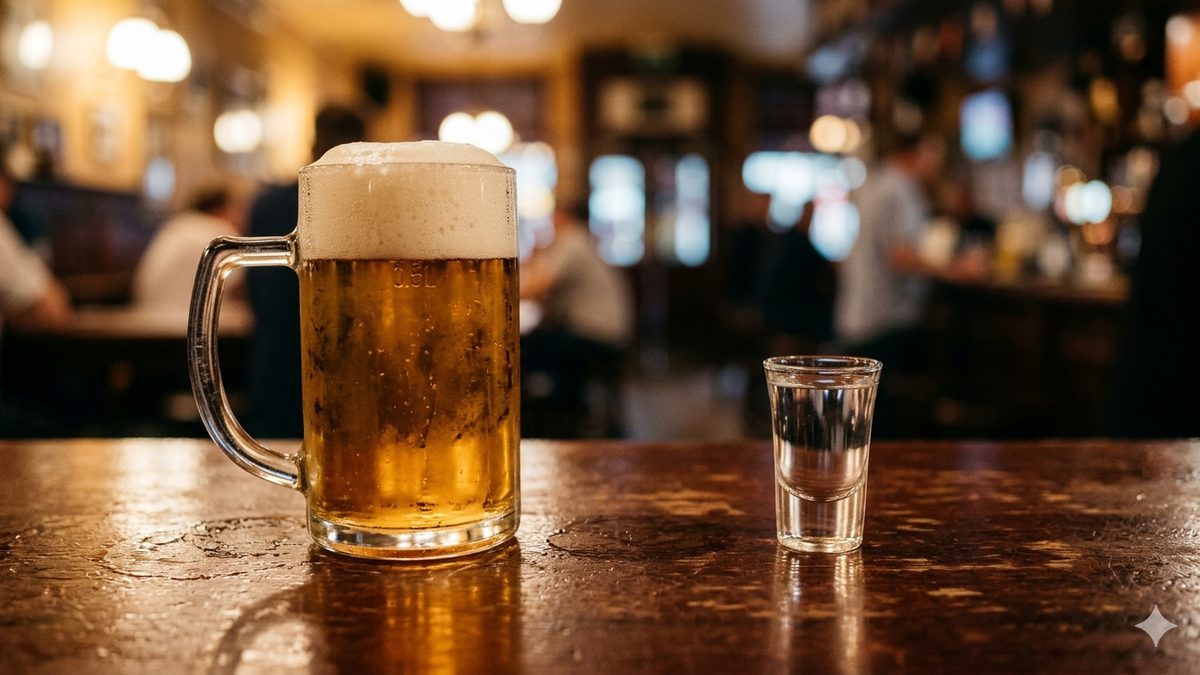
The article debunks the widespread myth that beer dehydrates the body. Based on randomized studies (notably Polhuis et al. 2017), it shows that the diuretic effect of alcohol is threshold-based, not linear — beer at 5% ABV produces no measurable diuresis beyond non-alcoholic beer, and thanks to its high water content (94%) it shifts the overall fluid balance into the positive. What matters is the concentration of alcohol in the drink, not the total amount of ethanol, and context (food, hydration status) further modulates the effect.
It says a colleague over lunch, the publican as he pours the third, the online hangover guru: beer dries you out, especially when you've had five. The intuition is so widespread that it sounds like a law of physiology. But when you approach it from the other side — from urine measurements, balance studies and randomized experiments — it falls apart into pieces that don't fit together. For a shot of vodka it roughly holds. For wine with a meal, rather less. And for five half-litres over the course of an evening something counterintuitive emerges: the body gets more water out of them than they carry away.
The most direct test of this question, the randomized crossover study by Polhuis et al. published in 2017 in the journal Nutrients, showed that beer at a concentration of 5% ABV in a moderate dose produced no measurable extra diuresis in older men compared with non-alcoholic beer of the same volume. Wine (13.5%) and spirits (35%) did trigger a small, statistically significant rise in excreted urine, but a short-lived one — within 24 hours the difference was erased. The diuretic effect of alcohol thus behaves in a threshold fashion, not a linear one: below a certain concentration nothing substantial shows up in the urine, above it a modest and short-lived response is set off, and even that does not match the popular image of being drained dry after five beers.
Why does it matter? Because folk wisdom and a range of health recommendations alike treat alcohol as a single, universal dehydrating substance, whereas the primary data show something entirely different: a threshold response strongly modulated by concentration, dose, food, temperature and the state of the organism. Where the popular heuristic generalizes, physiology distinguishes. And the difference is worth not a bon mot but a few hundred millilitres of fluid balance a day — which is not trivially little.
The classic notion that alcohol "steals" water from the body in a predictable ratio was established by experimental physiology in 1942. The British physiologist Marion Grace Eggleton published in the Journal of Physiology a measurement according to which about 10 millilitres of extra urine are excreted per gram of ethanol (Eggleton 1942). This figure gradually settled in as a working convention — Stookey used it in an epidemiological model in the European Journal of Epidemiology in 1999, and the constant still serves today for estimates of population fluid balance.
But the methodological weaknesses of Eggleton's work are disputed. Polhuis et al. (2017) note in their critique that her key estimate of 10 ml of urine per gram of ethanol comes from data on a single test subject, and that the author moreover did not report the alcohol concentration of the drink administered. Shirreffs and Maughan (1997), citing Eggleton directly, describe her methodology somewhat more broadly — as testing several subjects at two dose levels (8 grams and over 50 grams of ethanol), where the range of urine excreted over 2.5 hours was 82 to 114 ml at the lower dose and 642 to 858 ml at the higher one. Either way, this is work whose individual predictive power is very weak (MEDIUM as a working convention for population estimates, LOW as a precise individual value).
The actual inter-individual variability is in fact dramatic: Jones's forensic work in Forensic Science International 1990 measured, in healthy men drinking neat whisky, peak urine flow rates with medians of 117, 113 and 373 ml/h for three ethanol doses (0.51, 0.68 and 0.85 grams per kilogram of body weight), with individual values ranging from 41 up to 485 ml/h — that is, more than a tenfold spread across subjects and doses. Telling anyone "for every gram of ethanol you'll excrete 10 ml extra" is therefore best compared to the claim that an adult is 175 cm tall because the average says so. You can't do the conversion for an individual.
This is not just an academic detail. The survival of Eggleton's constant from a single old experiment into modern medical texts illustrates a broader pattern: once a number makes it into the textbooks, time works in its favour — even when later work shows that reality lies elsewhere.
The mechanism itself is well described. Ethanol suppresses the release of vasopressin (antidiuretic hormone, ADH) in the posterior lobe of the pituitary; lower ADH means less reabsorption of water in the distal nephron and thus a higher urine flow. This chain is universally accepted (HIGH) and explains why a few shots are followed by trips to the toilet. Quantitatively, however, the reality is far less obedient than the classic interpretation suggests.
First, the response is biphasic. The Finnish team of Taivainen et al. showed in Alcoholism: Clinical and Experimental Research 1995 that while diuresis dominates in the first three hours after consumption, an antidiuretic phase arrives overnight — under a subsequent water load the next morning, subjects who had drunk alcohol retained 44% of the water compared with 12% in the control variant without alcohol. This is connected with the rebound rise in vasopressin during a hangover, already described by Linkola in 1978. The body therefore begins, at night or the next morning, to retain water instead, which is why a hangover and swelling can coexist even though the urine in the first hours after drinking clearly shows a "dehydration" sign.
Second, the response is context-modulated. The key finding of Hobson and Maughan in Alcohol and Alcoholism 2010 was that during dehydration the diuretic effect of alcohol is markedly blunted: in hypohydrated subjects, beer with 4% alcohol excreted 261 ± 138 ml of urine compared with 174 ± 61 ml for the non-alcoholic version (a difference on the edge of statistical significance, p = 0.057), whereas in the euhydrated state it was 1279 ± 256 vs. 1121 ± 148 ml (p < 0.001). When water is scarce, the kidneys thus switch on a conservation mode that can partly override the alcohol signal (HIGH). What has held for years for caffeine holds here too: a "diuretic" is at full strength only on a full tank.
And third, more recent work by Stadlbauer et al. in the American Journal of Physiology – Renal Physiology 2019 cast doubt on whether alcohol acutely suppresses copeptin (a surrogate marker for vasopressin) more markedly than a water load alone. The mechanism as the textbooks describe it is therefore probably not entirely wrong, but at the very least needs fine-tuning (MEDIUM — a single new study, awaiting replication). And in chronic users tolerance develops — the vasopressin system adapts, so a regular drinker does not react acutely the same way as an occasional consumer (Harper & Thiele, Alcohol 2018; MEDIUM in humans, better documented in rodents).
The upshot of all these corrections is surprisingly simple: the popular image of "alcohol dehydrates linearly" does not stand. The reality is threshold-based, biphasic, context-modulated, and individually scattered by more than an order of magnitude.
In 2017 the team of Kristel Polhuis, from a group based in the Netherlands, published in the journal Nutrients a randomized crossover study which was the only one in the literature to attempt a direct comparison of beer, wine and spirits at the same ethanol dose. In it, twenty Dutch men aged 60 to 75, on a controlled diet, went successively through six visits with six test drinks: three alcoholic ones (Amstel beer 5%, red Merlot wine 13.5%, Dutch jenever 35%) and their three non-alcoholic counterparts (non-alcoholic Amstel, non-alcoholic Merlot, tap water). For the alcoholic variants there were always 30 grams of ethanol; for the non-alcoholic ones the same volume without alcohol. Consumption took place with lunch (lasagne) — a design that deliberately simulated a common situation in European eating culture.
The results are telling. Beer at a volume of 750 ml and a concentration of 5% ABV produced 829 ml of urine over the first four hours, while the non-alcoholic counterpart of the same volume produced 836 ml. The difference came nowhere near statistical significance (p > 0.70), and over 24 hours it was practically identical: 2459 ml for the alcoholic variant, 2435 ml for the non-alcoholic one. Wine at a volume of 280 ml and a concentration of 13.5% ABV produced 536 ml of urine versus 504 ml for the non-alcoholic version — a difference of +32 ml and statistically significant (p < 0.003). Spirits at a volume of 108 ml and a concentration of 35% ABV produced 471 ml of urine versus 450 ml for water — a difference of +21 ml, also significant (p < 0.001). In the 24-hour window, however, neither of these differences was significant any longer (all p > 0.10).
Three fundamental conclusions follow from these numbers. First: beer at a moderate dose produced no detectable diuresis beyond that of non-alcoholic beer. Paradoxically, thanks to its 750 ml volume it had the largest absolute urine output, but with the lowest osmolality — that is, the best net hydration balance of the whole battery. Second: wine and spirits set off a small but statistically significant transient increase in diuresis in the interval 2 to 4 hours after administration, which, however, vanished entirely within 24 hours. Third and most importantly: the incremental diuresis was practically the same for wine and spirits (p > 0.80 for the comparison ΔWINE vs ΔSPIRITS), even though the jenever contained roughly 2.6 times the concentration of the wine and seven times that of the beer. What decided the acute triggering of diuresis was therefore concentration above a certain threshold, not the total grams — which directly contradicts the classic linear notion.
The study does, however, have its limits, which must be named openly (MEDIUM caution on generalization). It was conducted in cooperation with the Dutch Beer Institute (Kennisinstituut Bier) and funded by the European Hydration Institute; three of the five authors (Polhuis, Wijnen, Sierksma) were, according to the conflict-of-interest statement, employees of the Kennisinstituut Bier during the study. Only men were tested, only seniors, without blinding, without direct measurement of vasopressin. The qualitative conclusions are nonetheless consistent with independent work (Shirreffs and Maughan 1997, Hobson and Maughan 2010), which reduces — though does not zero out — the risk of full bias.
Let us now calculate something that usually goes unsaid in a pub debate about beer and hydration: what exactly five half-litres do to the fluid balance of a person who drinks them over the course of an evening, at ease, with some food, and then goes to bed.
Five half-litres of a 10° or 12° beer mean 2.5 litres of fluid, of which roughly 2350 ml is water (beer is about 94% water) and approximately 100 grams of ethanol. If the naively applied estimate of 10 ml of urine per gram of ethanol held, that would mean roughly a litre of extra urine above the resting value — and a net balance of around +1350 ml. Which in itself already shows that "after five beers you're dried out" is a mythically inflated claim.
But as we showed above, with 5% ABV beer acute diuresis essentially does not get triggered at all, because the concentration is below the threshold. The 1942 estimate (devised for higher concentrations, measured on a narrow sample) clearly overstates the case for beer. The closest direct support for a dose of around 100 g of ethanol comes from the work of Shirreffs and Maughan 1997, where subjects drank 2.2 litres of fluid with 4% alcohol (i.e. ~88 g of ethanol) and over six hours excreted 1457 ml of urine. The net balance from the drink was therefore +755 ml — and that was a study conducted after sweat loss, i.e. in a less favourable scenario than an evening at rest.
A realistic estimate for five half-litres under the conditions of an ordinary Czech evening (at home, with food, no sport) thus looks like this: water intake ~2350 ml, extra urine above the resting value an estimated 400 to 800 millilitres, net balance +1500 to +1950 ml in favour of hydration. These figures carry wide uncertainty — individual variability is, according to Jones 1990, more than tenfold — but the direction is clear. Beer delivers more water than it carries away.
So no: after five half-litres you don't have to drink three litres of water. Arithmetically you are in the plus by a litre and a half to two litres. What you actually lack the next morning is something else, and more on that shortly.
The contrast with spirits shows where the physiological threshold lies. A shot of vodka (40 ml, 40% ABV) contains about 14 grams of ethanol and roughly 25 millilitres of water. If it triggered diuresis according to Polhuis's data for jenever (broadly comparable concentrations), we are talking on the order of tens of millilitres of extra urine — but the body received almost no water at all. The net balance is negative. A shot genuinely dehydrates.
This is the core of the difference that popular intuition merges into a single category, "alcohol". A 5% beer is 94% water, which shifts the balance into the plus regardless of the modest diuresis it doesn't even trigger anyway. A 40% spirit is 60% ethanol, which sets off a threshold diuretic response while bringing no water to cover the losses. The difference between beer and a shot is therefore not about how much alcohol is in it. It is about what that alcohol is dissolved in.
A similarly cautious stance was taken by the British Office for Health Improvement and Disparities in a Rapid Evidence Summary from 2023: according to their review, the evidence for an increase in urine output after alcohol is "unclear; some studies show an increase, others do not". That is an institutional acknowledgement of a fact that would never occur to most people: that behind beer's drying-out effect lies not a firmly established physiological fact, but a generalization from an entirely different type of drink.
Anyone who infers from the preceding lines that, after a run in the sun, they can rehydrate with beer instead of water makes a mistake — and has two decades of their own experimental data telling them so.
The second line of research, after all, does not ask "what does alcohol do at rest and with food", but "what does it do after sweat loss, when plasma volume needs to be restored". The classic design of Shirreffs and Maughan in the Journal of Applied Physiology 1997 had six subjects dehydrate by 2% of body weight and then rehydrated them with drinks of 0, 1, 2 and 4% alcohol at a volume of 150% of the loss. Median cumulative urine rose with alcohol (942, 1108, 1184, 1457 ml for 0, 1, 2, 4%), but the difference did not reach statistical significance (p = 0.307); the peak urine flow came late for the 4% variant (p = 0.024). From this the authors drew a formulation that then became the standard: up to 2% ABV alcohol there is no discernible difference from non-alcoholic in this situation, while 4% slows recovery (HIGH for the qualitative trend, MEDIUM for the quantitative estimates because of the small sample).
The most independent confirmation of this picture then came from Costa Rica. Flores-Salamanca and Aragón-Vargas published in Applied Physiology, Nutrition and Metabolism 2014 a study in which they had eleven subjects, after a heat load, rehydrate with either water, low-alcohol beer (0.5%), or full-strength beer (4.6%) at a volume corresponding to 100% of sweat loss. The result was unequivocal: full-strength beer produced 1218 ± 279 ml of urine compared with 774 ± 304 ml for water (p = 0.043) — markedly worse retention and a lower restored balance. Low-alcohol beer did not differ statistically from water (745 ± 313 ml). The study has no brewing-industry funding, and its conclusion is clinically practical: full-strength beer after exercise or in the heat is a poor rehydrant.
The Australian team of Desbrow et al. in two works (2013 on seven, 2015 on twelve men) showed that meaningful rehydration value is carried only by light beer of around 2.3% ABV with added sodium (25–50 mmol/l); full-strength beer, even with higher sodium, is not enough for rehydration, because the diuretic effect overrides the electrolyte gain. The practical intersection of the two lines of research is therefore clean: in a healthy person in the evening, at rest and with food, beer is essentially a hydrating drink comparable to water; in an athlete sweating in the sun, it is not. The difference lies in the state of euhydration versus hypohydration, and in whether the body has a reserve into which the alcohol signal can be absorbed.
One part of the debate is surprisingly mature. Across studies — Polhuis 2017, Flores-Salamanca 2014, Wijnen 2016 and Maughan for the British Hydration Initiative 2016 — it turns out that non-alcoholic beer and wine (0.0% ABV) do not differ statistically from water in diuresis or fluid retention (HIGH). The only limitation is the relatively low sodium content, which after heavy sweating restricts retention — but that is a problem shared with plain water, not a specific weakness of the non-alcoholic version. For ordinary hydration outside extreme exertion, non-alcoholic beer is a legitimate choice that does not burden the ADH axis.
Let us return to the question that usually underlies the conviction about drying out: why do I feel unwell the next morning, if you claim I'm in the plus?
The answer is — surprisingly — that a hangover has little to do with dehydration. The review by Mackus et al. in the journal Alcohol 2024 shows that dehydration is not the dominant cause of a hangover (MEDIUM-HIGH). Drinking water between drinks or after drinks only mildly eases its symptoms. The main mechanisms lie elsewhere: the inflammatory cascade (see Turner et al. in Alcohol, Clinical and Experimental Research 2024), the toxicity of acetaldehyde (an intermediate of ethanol metabolism), fragmented sleep, congeners in dark spirits, and morning hypoglycaemia after a heavy alcohol load the previous evening.
What is really lacking after five half-litres is not water (you've had plenty of that), but three other things. Salt and electrolytes — beer has only about 3 mmol of sodium per litre, that is a tenth of what a good rehydration drink has. Sleep — alcohol fragments both REM and deep phases, so a person sleeps worse even if they fall asleep sooner. Glycogen stores — an evening without food, the morning half-empty, and alcohol metabolism additionally blocking gluconeogenesis.
The practical advice supported by the data therefore is not "drink two litres of water before bed". It is: eat well in the evening, have an extra glass of water or non-alcoholic beer somewhere along the way because of the pace of consumption (not for hydration), and in the morning have something salty for breakfast — bacon, eggs, soup, pickled cheese. That is an intervention targeting the real deficits: sodium and glycogen. Three litres of water after five beers are not only unnecessary but, at extreme volumes of plain water without salt, also mildly risky (hyponatraemia).
Five factors shift the organism's response measurably more than ethanol concentration alone.
Food slows gastric emptying, lowers the peak blood alcohol level and markedly dampens diuresis (HIGH). That is why Polhuis 2017 deliberately administered the drinks with lunch — without food the effect for wine and spirits would probably have been more pronounced. Heat and physical exertion stack sweat loss on top of alcohol diuresis, and the combination is a well-documented risk factor — the CDC, NIOSH and NIAAA explicitly warn against it. Caffeine in mixed drinks acts as a diuretic in its own right, but more recent data (Maughan for the BHI 2016) do not confirm simple additivity — 96 to 212 mg of caffeine did not worsen the net fluid balance (MEDIUM). Riskier than the diuresis is the fact that caffeine masks sedation and leads to higher alcohol consumption.
Age, paradoxically, does not amplify alcohol diuresis, but it reduces the body's water reserve; seniors are more vulnerable through a smaller tank, not through a more pronounced response (MEDIUM). And sex is — in contrast to how often it is talked about — the most poorly documented category. The vast majority of primary studies (Polhuis, Shirreffs, Hobson, Wijnen, Maughan, Irwin) tested only men. Women have a lower total body water volume and a different vasopressin axis, but a direct quantification of the magnitude of alcohol diuresis in women under experimental conditions is essentially missing (UNVERIFIED / LOW for specific numbers). Popular texts claiming that "alcohol dehydrates women more strongly" extrapolate from other physiological differences — it is not documented by independent measurement.
The fact that international health authorities do not agree on a single line is itself a signal that no mature consensus underlies the popular intuition.
The European Food Safety Authority (EFSA), in its Scientific Opinion on Dietary Reference Values for Water from 2010 (doi:10.2903/j.efsa.2010.1459), sets a daily intake of 2.0 litres (women) and 2.5 litres (men) from "all beverages" and does not explicitly exclude alcoholic drinks from the balance. In the accompanying materials it nonetheless warns against the diuretic effect (HIGH).
The Czech National Institute of Public Health is considerably more conservative in the brochure Kožíšek 2025: "Coffee and alcoholic drinks are not part of the drinking regime; they cannot be counted into the required daily volume of fluids." It sets an indicative upper limit of 0.5 litre of beer, or 0.2 litre of wine, per day for a healthy adult, and for a hot working environment it does not permit alcohol above 1% as a protective drink (HIGH). The Czech position is therefore stricter than EFSA — but the difference is more a matter of preventive policy than a reflection of differing data.
The NIAAA (USA) explicitly describes both the mechanism of vasopressin suppression and the role of dehydration in a hangover, and warns against combining alcohol with heat. The CDC/NIOSH explicitly advise against alcohol as well as drinks high in caffeine or sugar during work in the heat. The American College of Sports Medicine, in its position stand Exercise and Fluid Replacement, does not recommend alcohol as a rehydration drink at all. The WHO does not specifically address the hydration aspect of alcohol; its official position focuses on carcinogenicity (Group 1 according to IARC) and "no safe dose" from an oncological standpoint.
In sum: the authorities responsible for public health and occupational safety are understandably more cautious than those concerned with the population's nutritional balance. But their discrepancy is not a discrepancy of data — it is a discrepancy of approach. The data themselves show a threshold response; health policy then chooses where to set the threshold defensively.
The most honest challenge to this article's thesis does not say "beer dehydrates the same as a shot". It says something subtler and more serious: most studies favourable to beer have direct or indirect brewing-industry funding. Polhuis 2017 (Kennisinstituut Bier, European Hydration Institute). Wijnen 2016. Jiménez-Pavón 2015 (the Spanish beer association Centro de Información Cerveza y Salud). Maughan for the BHI 2016. Those are four of the key works claiming "beer is not a dehydrant". Their methodology is professional, but the commissioning link is not a negligible detail.
The counterweight is formed by the independent post-exertion studies (Shirreffs and Maughan 1997, Hobson and Maughan 2010, Flores-Salamanca 2014, Desbrow 2013 and 2015), which qualitatively confirm the threshold character of the response but are more cautious about claims of active rehydration with full-strength beer. A skeptical reader therefore has every right to demand an independent replication of Polhuis 2017 in a design with women and younger subjects. This is a valid epistemic obligation worth naming.
It does not mean, however, that the main qualitative conclusion collapses. The independent works show the same picture — they merely apply it to a different situation and are more reserved in their practical recommendations. The difference between "beer at rest and with food behaves like water" (supported by industry) and "beer after exercise in the sun is a poor rehydrant" (independently supported) is not a contradiction, but two different questions with two different answers. The popular oversimplification is the problem, not the data themselves.
Let us return to the beginning, to the conviction that five half-litres over the course of an evening dry the body out so much that they must be followed by some form of rehydration intervention.
The arithmetic of the balance does not confirm this conviction. Five beers bring roughly 2.35 litres of water and a hundred grams of ethanol. Polhuis 2017 showed that a beer concentration of 5% essentially does not trigger an acute diuretic response. Shirreffs and Maughan 1997 measured, at a comparable dose, a net balance in the plus by three-quarters of a litre even in the worst scenario after exercise. A realistic evening estimate for a healthy person with food ends in the plus by one and a half to two litres. Beer is not a dehydrant at the dose at which it is usually drunk in the Czech Republic.
Spirits are an entirely different story. A few dozen millilitres of water, fourteen grams of ethanol at a concentration of thirty percent and above, the threshold diuretic response triggered. Here the net balance really is negative. If a dehydration concern is in play, the legitimate candidate for it is a shot, not beer. And if heat, sport and sweat loss are in play, then beer too begins to be a problem — but not because alcohol "steals water", rather because the volume drunk does not suffice to replace the sweat loss and the electrolytes are missing from it.
Eggleton's 1942 estimate, built on a very narrow sample, lives on in textbooks and leaflets as the only quantitative guideline. But the primary randomized data of the last thirty years show something physiologically more subtle: below a certain ethanol concentration the response does not get triggered at all, and the difference in concentration is more important in this story than the difference in total dose. The difference between beer and a shot is therefore not quantitative. It is qualitative.
Which does not mean that beer deserves a promotion to a hydration drink. It means only that it deserves to be measured by its own yardstick — and not by a yardstick borrowed from a shot.
With the highest confidence (HIGH, primary source verified) stands: ethanol acutely suppresses ADH and increases diuresis; beer at a concentration of roughly 5% in a moderate dose, in a euhydrated state and with food, does not cause net dehydration; wine around 13.5% and spirits around 35% cause short-term diuresis; differences in urine at moderate doses disappear within 24 hours; non-alcoholic beer and non-alcoholic wine do not differ practically from water in terms of hydration; full-strength beer after exercise worsens rehydration; a boundary around 2% ABV for significant diuresis after exertion; food taken alongside dampens diuresis; heat combined with alcohol means greater dehydration; EFSA counts alcoholic drinks into fluid balance, the Czech National Institute of Public Health does not; the ACSM, NIAAA and CDC do not recommend alcohol for rehydration.
With medium confidence (MEDIUM) it can be asserted: that the triggering of acute diuresis is decided by concentration more than by total grams (Polhuis 2017 is so far the only direct evidence); that Eggleton's estimate of 10 ml of urine per gram of ethanol is usable only as a rough convention, not as a precise measurement of the individual response; that chronic drinkers develop tolerance to alcohol diuresis; that dehydration is only a partial and secondary cause of a hangover (i.e. refuted as the dominant cause); and that the balance for five half-litres ends in the plus by 1.5 to 2 litres — this being an extrapolation from primary data testing lower doses.
Conversely, as insufficiently verified (UNVERIFIED / LOW) one must label: the specific quantification of sex differences in alcohol diuresis (experimental data in women are essentially missing); and the claim of a large additive diuretic effect of caffeine in alcoholic drinks (more recent data do not confirm it). And as refuted popular heuristics stand the claims "beer dehydrates in proportion to the count" and "dehydration is the main cause of a hangover".
Experimental primary studies:
Reviews and institutional positions:
Industry-supported studies (marked): Polhuis 2017 (Kennisinstituut Bier + EHI), Wijnen 2016 (EHI + Kennisinstituut Bier), Jiménez-Pavón 2015 (Centro de Información Cerveza y Salud), Maughan for BHI 2016.
The article is a review summary of the published experimental literature; it does not replace medical advice and does not work with specific dosing recommendations. Claims are marked with a confidence level (HIGH / MEDIUM / LOW / UNVERIFIED); the key citation (Polhuis 2017) is given together with a note of its industry funding. The arithmetic for five half-litres is an extrapolation from primary data testing doses up to ~2.5 litres of fluid and up to ~100 g of ethanol; no study tested higher amounts, so for extreme consumption (10+ beers) the estimates are speculative and were not presented in the article. The article likewise does not address the acute toxicity of alcohol, which at high doses overshadows the question of hydration. Information cut-off: April 2026. Before using it for decisions in the field of sports nutrition, occupational health or rehydration management, I recommend independent verification against primary sources and consultation with an expert.
Transparency of creation:
The conception, structure and editorial line of the article are the work of the author, who drew up the content sketch, established the key theses and directed the entire creation process. Generative AI (Claude, Anthropic) was used as a tool for research, searching for primary sources and the formulational elaboration of the author's content sketch.
The author continuously edited the outputs, verified the key findings and approved the final wording. No part of the text was published without human review. All factual data were verified against the publicly available sources cited in the text.
The procedure complies with the requirements of Art. 50 of EU Regulation 2024/1689 (AI Act) on the transparency of AI-generated content. #poweredByAI
Read the Czech original on Médium.cz.
AI · Claude — machine translation, may contain inaccuracies.