British search engine Mojeek defies Google and artificial intelligence for twenty years
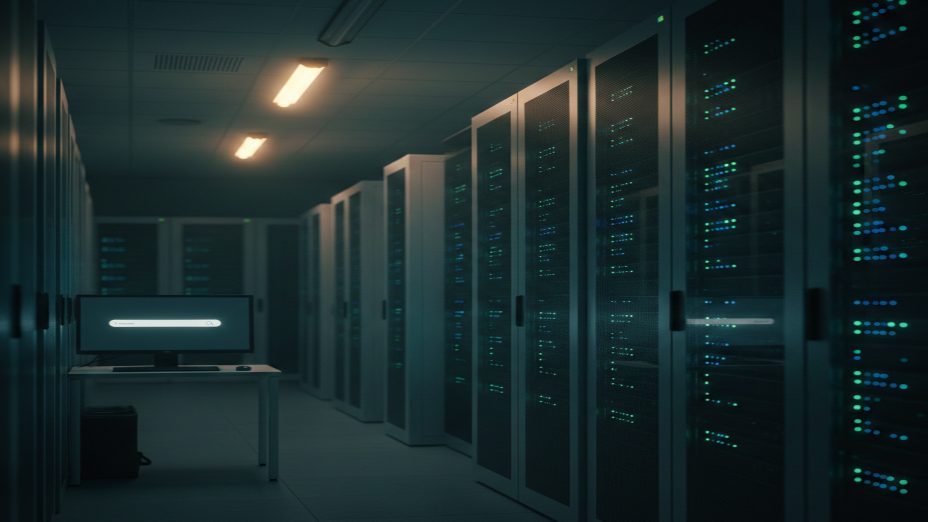
Mojeek, a British search engine founded in 2004 by a single developer from Brighton, is the only one in the world to combine its own index of nine billion pages, zero user tracking, and a refusal to replace results with generative-AI answers. With a team of three to six people and total funding of under four million dollars over twenty years, it represents a unique alternative to Google and Bing, while its search API is becoming a valuable source of independent web data for artificial-intelligence companies.
In October 2004, Marc Smith launched a search engine from the bedroom of his flat in Brighton, running it on two donated servers. Twenty years later his Mojeek indexes over nine billion web pages, has its own web crawlers, its own results-ranking algorithm and its own data center — and it has just refused to do what the entire industry now regards as inevitable: replace search results with answers generated by artificial intelligence.
Mojeek is an anomaly. At a time when Google is rolling out AI Overviews, Microsoft is rebuilding Bing into CoPilot and Brave Search offers Ask Brave, it is the only search engine in the world that combines three properties at once: a completely independent index of the web, zero user tracking, and a refusal to replace traditional results with answers from generative artificial intelligence. This article examines how it manages this — and what the odds are that this position is sustainable.
The story begins prosaically. Around 2001, Smith was helping a friend with the distribution of a computer game and grappling with how to rank higher in Google's results. Frustration led him to a question few people ask: how does a search engine actually work on the inside? Instead of paying a consultant for search engine optimization, he started writing his own.
Development took three years. Smith wrote in the C language — without using any existing search software. As the company's official website states, all of the technology and intellectual property is, to this day, fully owned by Mojeek Limited. His friend Guy bought Smith a computer to serve as the server. In October 2004, Mojeek first went live on the public internet.
The turning point came on 18 March 2006. That day, Smith noted in his operational logs that a user had arrived from Google and immediately searched for sensitive health information. He realized that search engines have no right to track what people search for, and publicly declared a zero-tracking policy — the first such commitment by a search engine in history. That policy remains in force today.
Money came slowly. A first investment of £50,000 from a private investor in 2009 enabled the founding of a limited liability company. In 2013, a group of private investors added £250,000. Mojeek has never been venture-capital funded and, according to the company's blog from October 2020, it will stay that way.
What sets Mojeek apart from the vast majority of "alternative search engines" such as DuckDuckGo, Ecosia or Startpage? Those use results from Google or Bing and add a layer of privacy on top. Mojeek does nothing of the sort. Its web crawler, MojeekBot, traverses the internet on its own, its index-building system extracts content and links, and the results are ranked by its own algorithm.
The growth of the index is documented by long-term statistics: one billion pages in 2015 (at the time the first and only British search engine to cross that threshold), two billion in June 2018, four billion in June 2021, six billion in October 2022. As of 2025, according to data from the Tracxn database and the Grokipedia encyclopedia, Mojeek exceeds nine billion pages.
For comparison: Google indexes hundreds of billions of pages, Bing tens of billions, Brave Search indexed over 35 billion in January 2026 and already over 40 billion in February 2026. Mojeek is therefore an order of magnitude smaller — but it still ranks among the roughly five Western search engines with their own index (alongside Google, Bing, Yandex and Brave Search).
The entire infrastructure runs on hundreds of its own physical servers in the Custodian DC data center in Maidstone, Kent, which presents itself as one of the greenest in the United Kingdom. According to a technical blog post from December 2020, the public layer is made up of a combination of lighttpd, PHP, PostgreSQL and Redis. The median response time to a query is 88 milliseconds.
The results-ranking algorithm is called Gravity and is an analogue of Google's PageRank algorithm. It uses on the order of hundreds of billions of links to compute a query-independent page authority score, which it combines with keyword matching and, since 2024, with semantic matching based on vector representations. The key principle: no personalization, no click data, no manual intervention in the results. Two users with the same language and location settings get identical results — at any time and from anywhere.
Mojeek Limited is registered with the UK companies registry (Companies House) under number 06918197. Founder Marc Smith retains majority control over the voting rights. The chief executive officer is Colin Hayhurst, a seasoned technology entrepreneur. He co-founded his first company in the 1980s and led it to a successful sale to ANSYS, listed on the NASDAQ exchange, in 2005. Later he co-founded the company GoScale within the Y Combinator program (summer 2012 cohort) and the consulting firm DataJavelin, focused on machine learning.
According to data from the Tracxn database, the company has raised approximately $3.94 million in total across five early funding rounds. The most recent round, from August 2024, amounted to $512,000. Notable investors include Edward Iliffe, owner of Iliffe Media — a network of British regional publishers. As Mojeek explains on its blog, Iliffe understands the threat that Google poses to smaller publishers and shares the values of independent search.
The number of employees, according to various sources, ranges between three and six. For a search engine indexing nine billion pages, that is a remarkably low figure. The PitchBook database records three employees, the LeadIQ portal lists approximately three with a presence on two continents (Europe and Asia), and Tracxn mentions six as of 2022.
For funding context: Brave Software as a whole surpassed an annualized revenue of $100 million in 2025 (according to The Information in November 2025). DuckDuckGo generates an estimated hundreds of millions annually. Mojeek operates in an entirely different league — the Owler portal estimates $375,000 in revenue per employee, so total turnover probably does not exceed the low single-digit millions of dollars.
Mojeek's way of making money rests on three pillars.
The first and strategically most important is the search interface (Search API). Mojeek offers full access to its index through a simple protocol with a response in JSON or XML format. Pricing starts at one pound per thousand queries (the Personal plan), through two pounds (Startup) and three pounds (Business), up to a custom enterprise plan. The interface explicitly permits use for artificial intelligence and machine learning, integration with conversational bots and large language models, re-ranking of results, and combination with other data sources. Since mid-2023, its customers have included Kagi Search, which uses Mojeek as one of the sources for its results.
The second pillar is contextual advertising. Mojeek operates its own advertising platform, Mojeek Ads, where ads are targeted exclusively at keywords in the query and geographic location — no cookies, no profiling, no tracking. The ads are supplied by its partner Prorata; Mojeek passes it only the query and the country code. The platform is in an early stage and is accepting a limited number of new advertisers.
The third source is site search (Site Search API) — a hosted search solution including targeted crawling and indexing of the customer's pages.
In September 2025, chief executive officer Colin Hayhurst published a post on the company blog titled "Mojeek is Not an Answer Engine." The text is, in effect, a manifesto. In it, Hayhurst observes that almost every company in search is rushing to embed artificial-intelligence answers into results — and that Mojeek is not following this path.
The argument rests on four points. First, AI answers replace links to sources with simplified and generalized text, thereby reducing the diversity of the web. Second, independent research shows that users presented with AI overviews click through to original sources less often — which harms content creators. Third, large language models compress information without responsibility for the consequences and inevitably hallucinate. Fourth, the whole trend is heading toward uniformity, where a handful of companies determine how billions of people access information.
At the same time, Mojeek does not reject machine learning outright. It uses it for semantic matching in the ranking algorithm (since 2024) and to optimize web crawling. Moreover, since April 2024 it has offered optional summaries generated by a language model — but as a supplement alongside traditional results, not as their replacement. In October 2023 it also proposed the NoML initiative — a new markup element for web pages (a meta tag) that would let site administrators distinguish consent to indexing for search from consent to use of content for training artificial-intelligence models. The intention is to separate two fundamentally different activities: crawling the web for the purposes of search and crawling the web for the purposes of artificial intelligence.
Mojeek's position is therefore more precise than a mere "against artificial intelligence": search should be a tool of discovery, not of mediation. The role of a search engine is to connect the user with the web, not to place itself between them.
In August 2025, Microsoft shut down the public Bing Web Search API. As early as 2023 it had raised the prices of this interface several-fold — in some plans up to tenfold. In December 2025, Google sued the company SerpApi for unauthorized machine copying of its results. The space for legal access to independent web data has narrowed dramatically.
In this context, Mojeek's search interface is becoming one of the few commercially available sources of an independent web index — together with the Brave Search interface. And it is cheaper: Mojeek starts at one pound per thousand queries, Brave at five dollars per thousand.
For artificial-intelligence companies seeking up-to-date information from the web to ground their models' answers, it is a relevant alternative. Mojeek's interface explicitly permits use for artificial intelligence and machine learning on all plans, data storage on the enterprise plan, and unlimited queries on the custom plan.
A principled position has its price. An index of nine billion pages is an order of magnitude smaller than Google's or Bing's, which shows in the quality of the results. A review on the MakeUseOf site from January 2026 describes the experience with Mojeek as inconsistent — for some queries excellent results, for others irrelevant. The author gives the example of searching for bus connections, where Google displays a timetable while Mojeek returns the website of a dog boarding kennel.
Specialized features that users have come to expect are missing: maps, translations, shopping comparison engines, local recommendations. With a team of three to six people and total funding under four million dollars over twenty years, the capacity for development is limited.
There is also a personnel risk. Marc Smith is the key developer of the entire technology — his departure would have existential consequences for the company. And while a financial model based on rejecting venture capital protects independence, it constrains growth at a time when competitors are investing billions.
Critics, as the WebProNews site reported in January 2026, argue that without vigorous development Mojeek risks losing relevance. Defenders counter that two decades of survival in the most competitive sector of the technology industry speak for themselves.
Mojeek proves that, technically, building an independent search engine is feasible even with minimal resources — one developer, the C language, twenty years of perseverance. An index of nine billion pages with a median response time of 88 milliseconds on hundreds of its own physical servers is an engineering achievement worth noting.
Strategically, the more interesting question is whether the position of "we don't replace results with artificial intelligence" is a differentiator or a dead end. In the short term it appeals to a growing group of users frustrated by artificial-intelligence overviews in Google and Bing — privacy advocates, journalists, academics, the open-source software community. In the long term it depends on whether artificial-intelligence-driven search becomes such a dominant model that search engines without it lose their point.
Paradoxically, Mojeek's greatest value today may not be its search engine for end users, but its developer interface — as an independent source of web data for artificial-intelligence companies that need that same web so their models can answer questions requiring up-to-date information. A search engine that refuses artificial-intelligence answers may thus feed those who provide them.
It is a story about principles, perseverance and the quiet stubbornness of one developer from Brighton. Whether it is a story with a happy ending only time will tell.
Methodological note: This article draws on publicly available sources — Mojeek's official site and blog (mojeek.com, blog.mojeek.com), the UK companies registry (Companies House), the Tracxn, PitchBook, Crunchbase and Owler databases, reviews on the MakeUseOf and WebProNews sites (January 2026), the documentation of Mojeek's search interface, and Wikipedia (updated December 2025). The financial figures are third-party estimates — Mojeek does not publish annual reports with detailed financial reporting. Information cutoff: February 2026.
Transparency of creation
The conception, structure and editorial line of the article are the work of the author, who prepared the content outline, set the key theses and directed the entire creative process. Generative AI (Claude Opus 4.6, Anthropic) was used as a tool for research, fact-checking and fleshing out the author's draft.
The author verified the key findings and approved the final wording. No part of the text was published without conscious authorial control. Factual data were verified against the publicly available sources cited in the text.
The procedure complies with the transparency principles of EU Regulation 2024/1689 (AI Act). #poweredByAI
Read the Czech original on Médium.cz.
AI · Claude — machine translation, may contain inaccuracies.