Fourteen Points You Can't Say Yes To: The Anatomy of the Iranian Escalation Trap
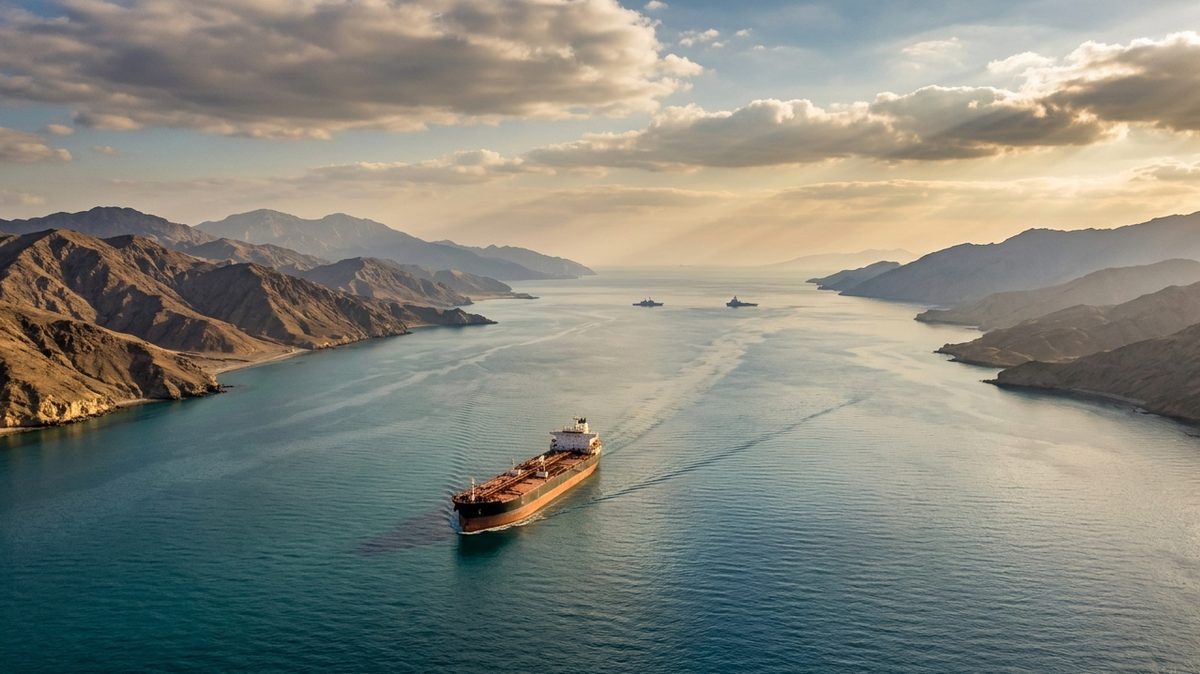
The article analyzes the Iranian fourteen-point document from late April / early May 2026, by which Tehran responded to the U.S. proposal to end the war, and defends the thesis (with medium confidence) that it is not a proposal to resolve the conflict but a structural cementing of the stalemate, in whose continuation Iran has a dominant interest. The author dissects five "toxic" points (reparations, withdrawal of U.S. forces from the Gulf, a guarantee of non-aggression against Israel, control of Hormuz, and an unworkable thirty-day deadline) as well as the factionalization of the Iranian leadership after the February strike, which renders the document systemically irreducible and thus unacceptable. In the context of oil prices above $110, depleted U.S. munitions stocks, and Trump's three scenarios, it offers the prediction that no comprehensive deal will emerge by 30 May 2026 — prolonging the stalemate is the most likely outcome.
On the night of Thursday, April 30, into Friday, May 1, 2026, an Iranian delegation in Islamabad handed Pakistani intermediaries a fourteen-point document. Since Saturday it has taken on a media life of its own. The semi-state agency Tasnim and the state-run Press TV describe it as a "comprehensive plan for a permanent end to the declared war"; Deputy Foreign Minister Kazem Gharibabadi summarized it rhetorically: "The ball is now in the United States' court — it will either choose the path of diplomacy, or the continuation of a confrontational approach."
The Trump administration has so far responded only with the president's "I can't imagine that being acceptable" (remarks to reporters on Saturday, May 2, on the way to Air Force One, cited by NPR and CNN) and a warning that strikes could resume at any time. Meanwhile, Brent crude on Thursday, April 30, touched $126.41 per barrel intraday — a level the global market had not seen since Putin's invasion of Ukraine in 2022 (Euronews; CNBC, April 30). American gasoline, according to AAA, held that same day at $4.30 per gallon, a four-year high. Brent closed the week around $111 — nearly double the level of January 2026, before the war began.
The argument of this text is simple and held with medium confidence: the 14 points are not a proposal to resolve the conflict, but to structurally entrench it. This is not a failure of diplomacy. It is its function. Prolonging the stalemate — not overcoming it — is currently the dominant Iranian interest, and the 14 points are a document that tends to that interest. A competing reading, also worth attention, is offered by Trita Parsi of the Quincy Institute in Al Jazeera on May 3: he argues that Trump's naval blockade of Iranian ports did not bring negotiations closer to a deal but instead pushed them away, and that the president held a strategically stronger position during the ceasefire, which he has now buried. If he is right, the problem lies in Washington, not Tehran. I will return to Parsi.
Iran has not published the full text of the document. From the reporting of Tasnim, Press TV, NPR, Al Jazeera, and CNN, one can reconstruct a structure with three phases. The first phase — at least thirty days — is meant to transform the ceasefire into a permanent end to the war and includes the withdrawal of U.S. forces from Iran's periphery, an end to the naval blockade of Iranian ports (imposed on April 13), the establishment of an international verification body, a mutual non-aggression commitment explicitly covering Israel and Iranian allies, an end to fighting "on all fronts, including Lebanon," and a new regime for passage through Hormuz. The second phase opens the economic dimension: the release of frozen assets, the gradual lifting of sanctions, the payment of war reparations. Yet Iranian Foreign Ministry spokesman Esmaeil Baghaei claimed on Iranian state television on Sunday, May 3, that "the 14-point plan focuses exclusively on ending the war and contains no questions concerning the nuclear domain" (cited by CNN). That contradiction is itself a signal, and I will return to it below. The third phase envisions a strategic dialogue with Arab countries on a regional security system — from the Iranian perspective a historic breakthrough, from the perspective of Saudi Arabia and the United Arab Emirates the institutionalization of Iranian influence over the Gulf.
If we view the 14 points as isolated items, about five of them leave room for negotiation: timelines, the gradual lifting of sanctions, the mechanism for clearing mines from the strait. The remaining nine have a structure that closes that room. Five of them are toxic enough to warrant special attention.
The first is the demand for war reparations. Reparations work diplomatically only when there is implicit agreement on the question of responsibility — Germany paid after both world wars, the United States has never paid. The Iranian demand therefore implies that the American-Israeli strike of February 28, 2026, was an unlawful act of aggression; the American side, however, justified it by "the right to self-defense under the UN Charter until the Security Council acts." That is a classification not shared by Russia, China, or much of the Global South, but no American administration can publicly accept reparations without thereby setting a precedent that constrains all future preemptive operations. Reparations, moreover, are among the indivisible items. Sanctions are lifted gradually; reparations are not. Accepting thirteen of the fourteen points is politically untenable, because the remaining one devalues all the rest.
The second impassable demand is the withdrawal of U.S. forces from Iran's periphery. The Fifth Fleet is based in Manama, Bahrain; Al-Udeid Air Base in Qatar is the largest American base in the region; Ahmed Al-Jaber in Kuwait, Al-Dhafra in the United Arab Emirates, and capabilities in Iraq and Jordan form a network that has anchored American commitments to the entire Arab façade of the Gulf since the Carter Doctrine of 1980. Either the United States disconnects from this architecture — and Saudi Arabia and the UAE lose the American security umbrella and will have to replace it, either with their own nuclear capabilities (as Riyadh hinted in September 2023 through Crown Prince Mohammed bin Salman on Fox News) or by turning toward China — or it does not. Any version of the first scenario is a strategic defeat for the U.S. in the Gulf. The Trump administration knows this, and Iranian negotiators know it too; the presence of American forces in the Gulf is infrastructure that is not vacated on the calendar of a single ceasefire.
The third item — a mutual non-aggression commitment "including Israel" — is the most elegant part of the trap. Israeli security doctrine, ever since the strike on Osirak in 1981, has included the right to a preemptive strike under existential threat; no Israeli government, not even a hypothetical leftist one under Lapid, can formally abandon this principle. The Iranian demand thus calls on the United States to extract from Israel, on Iran's behalf, a commitment that Israel cannot accept. The trap has two sides. If Washington signs the point and Tel Aviv refuses, the deal collapses and the blame falls on the White House. If Washington refuses the point already in the first phase, Tehran gains the narrative "we offered guarantees, the U.S. rejected them" and a structural reason to continue the nuclear program as insurance.
The fourth toxic item concerns Hormuz. The Iranian parliament, according to CNN, was on May 2 preparing for adoption a twelve-point law under which "hostile countries" (read: the U.S.) would have to pay "reparations" for permission to transit, Israeli vessels would be barred forever, and all others would need Iranian authorization. Marco Rubio responded to this on Fox News on April 27 with words that cannot go unquoted: "What they mean by opening the strait is: yes, the strait is open, as long as you coordinate with Iran, get our permission, or we blow you up and you pay us. That's not opening the strait. Those are international waterways." Were Washington to formally accept Iranian control over Hormuz, it would create a precedent for every state controlling a strategic strait — Egypt over Suez, Turkey over the Bosphorus, Indonesia and Malaysia over Malacca. UNCLOS would lose its structural integrity.
The fifth item is the thirty-day deadline for a comprehensive resolution of the entire agenda. The JCPOA negotiations in 2015 took twenty months; the agreement effectively covered a single question, the nuclear one. The 14 points encompass nuclear verification, sanctions, reparations, a regional security framework, and Hormuz with multilateral involvement — all within a one-month horizon. That is not an ambitious goal; it is a mathematically impossible goal — and in the terminology of James Fearon, author of the 1994 study Domestic Political Audiences and the Escalation of International Disputes, it generates an audience cost that publicly binds Iranian negotiators to a position from which they cannot retreat without losing face.
Here I return to Parsi's counterargument. The Quincy Institute argues that Trump's blockade was a strategic mistake that pushed Iran away from the negotiating table instead of pressing it toward one. That is a non-negligible thesis. It assumes, however, that there is a unified Iranian position, that there is someone to negotiate with. And that is precisely what, according to verified reports, currently does not hold. Mojtaba Khamenei, proclaimed supreme leader on March 9, has according to CNN's April 21 report not appeared in public since his announcement — no video, no audio recording, only statements read by state-television announcers and reportedly even AI-generated videos. He was, according to multiple sources, wounded in the joint American-Israeli strike that on February 28 killed his father, his wife, his son, and his sister and her child (AFP; Wikipedia, "Assassination of Ali Khamenei," citing Iran International and The New York Times; The Telegraph). IRGC commander Ahmad Vahidi, appointed on March 1, is according to the Institute for the Study of War's assessment of April 29 "Iran's current decision-maker" (cited by The Washington Times). Vahidi, according to the ISW, pushed Mohammad Bagher Zolghadr onto the Islamabad negotiating team over the objections of Parliament Speaker Ghalibaf and Foreign Minister Araghchi; when Araghchi announced on April 17 the opening of Hormuz to commercial shipping, hardliner media in Iran attacked him, and the IRGC declared the strait closed again the very next day (Time, April 21; Euronews, April 22; Iran International).
If this structure holds — and the assessments of the ISW, Iran International, CNN, Time, and Al Jazeera are converging on it — then the 14 points do not represent a unified position but a compromise among factions, into which each inserted its "cannot retreat" items. Reparations and the Israel guarantees are IRGC-coherent; the thirty-day deadline matches Vahidi's preference for rapid escalation; the three-stage design with the nuclear question deferred is Araghchi-esque. Such a document is systemically rejectable, because there exists no reduction of it that all three factions would approve. Marco Rubio formulated this explicitly on April 27: "One of the obstacles is that our negotiators aren't just negotiating with the Iranians. These Iranians then have to negotiate with other Iranians to figure out what they can agree on." On this point, Rubio and Parsi are paradoxically on opposite sides: Rubio sees Iran's internal contradictions as the reason the deal is unattainable; Parsi sees American escalation as the reason Tehran has reunited around its hardliner core.
To this is added the economic logic of the stalemate. Iran's economy has been under sanctions for nearly half a century — longer than most Iranians have been alive; Trita Parsi himself told Al Jazeera that "none of these sanctions has managed to break Iranians or force them to capitulate." The sanctions created a parallel economy in which the IRGC collects tolls — from ports through gold smuggling to a formalized system of payments by ships in Hormuz, which the twelve-point law is meant to institutionalize. Brent above one hundred dollars is at the same time a budgetary lifeline for Russia's war economy; Iranian Foreign Minister Araghchi therefore visited Putin in St. Petersburg on April 27, and Peskov described the meeting as "invaluable." The depletion of American stockpiles is a problem of its own. According to the CSIS report by Mark Cancian and Chris Park, "Last Rounds? Status of Key Munitions at the Iran War Ceasefire," of April 24, 2026, the U.S. military consumed in the Iran war roughly half of its critical missile-defense stockpiles — Patriot, THAAD, Precision Strike Missiles — and replenishment will take one to four years for Patriot and THAAD, and several more to return to prewar levels. The main risk, according to Cancian, the analysis's author and a senior advisor at CSIS, is not that munitions will run out for this war, but that the stockpiles will not suffice for a possible conflict with China. From this perspective, Beijing watches the stalemate with interest.
Trump's Math
From the White House, at the turn of April and May, three currents of thinking are visible. Scenario one: prolonging the stalemate. The U.S. maintains the naval blockade (Trump on May 1, in a speech at a rally in Palm Beach, publicly called it "a very profitable business, we're basically like pirates, but we're not playing around"), Iran maintains Hormuz, oil stays between $100 and $125, and the midterm elections take place in November under the shadow of fuel inflation. Scenario two: escalation. Trump, according to Axios's April 30 report, received a CENTCOM briefing on plans for "possible military action against Iran" — a short, intense wave of strikes on infrastructure, possibly a ground operation to open Hormuz. No actual decision on strikes has yet been made. The risk is twofold: further depletion of the arsenal below a critical threshold, and retaliation against the remaining American presence in the region. Scenario three: a breakthrough deal. It requires Iran to effectively abandon six of the fourteen points — Israel, the U.S. withdrawal, the regional architecture, Hormuz, reparations, the thirty-day deadline. That is more than a third of the document. The probability of such a reduction, given the factionalization described, is close to zero.
What makes the trap a trap is not any one of these points on its own, but their intersection. The Trump administration moves within it as within a geometric figure all of whose sides are narrowed. Scenario A is costly, scenario B dangerous, scenario C unavailable. If one prediction can be distilled from the 14 points, it is this: by May 30, 2026, no comprehensive deal will be concluded; the probability of prolonging the stalemate is in the upper sixties percent, the probability of escalation in the second half of May rises toward thirty percent, and the probability of a breakthrough remains in single digits. This distribution can change only through an external shock — either fragmentation within Iran (Mojtaba's health, the IRGC versus the civilian leadership) or an American strategic decision that has so far not been articulated in Trump's rhetoric. The War Powers Resolution of 1973, moreover, placed in his path on May 1 a sixty-day window, which the administration is for now circumventing by claiming that the ceasefire "ended hostilities."
Meanwhile, in Hormuz, what the president himself named continues. The Iranian parliament is finalizing the law on transits through the strait. The Israeli air force bombs the Bekaa Valley despite the Lebanese ceasefire of April 16. Brent oscillates between $108 and $115, with occasional jumps higher depending on market sentiment. The stalemate is itself a market — and as long as it has its beneficiaries, the fourteen points remain what they are: a well-crafted record of a state of affairs that none of the main actors wants to change.
Disclaimer
The structural thesis of the "trap" is an analytical hypothesis held with medium confidence, not a factual statement.
Primary and secondary sources
Reporting on the 14-point proposal itself: Tasnim News Agency and Press TV, May 2, 2026; NPR, "Iran submits 14-point response to U.S. proposal to end war," May 2, 2026; Al Jazeera, Priyanka Shankar, "What's Iran's 14-point proposal to end the war?", May 3, 2026; CNN Day 64 Middle East conflict liveblog, May 2, 2026.
Market data and Trump quotes: CNBC, "Brent oil pulls back after climbing to 126 wartime high," April 30, 2026; ABC7 / CNN Business on AAA prices, April 30, 2026; Reuters / AFP / Al Jazeera on Trump's appearance in Palm Beach, May 1.
Factionalization of the Iranian leadership: CNN, "Iran's new supreme leader is nowhere to be seen," April 21, 2026; Time, "War, Iran, Mojtaba Khamenei, Supreme Leader," April 21, 2026; Wikipedia, "Assassination of Ali Khamenei" and "2026 Iranian supreme leader election," citing Iran International, The New York Times, and AFP; AFP/Al-Monitor overview of casualties in the Khamenei family (March 12, 2026); The Telegraph on the leaked audio recording about the strike; Institute for the Study of War (cited by The Washington Times, April 29, 2026); PJ Media (Rick Moran) citing the ISW on Zolghadr's role; Iran International on the internal crisis of the delegation in Islamabad (April 14, 2026); Al Jazeera, "Who is Ahmad Vahidi, the IRGC's new commander?", March 6, 2026.
Marco Rubio quotes: Fox News interview, April 27, 2026 (State Department transcript; secondarily Bloomberg, CNN, Times of Israel, The Hill).
Competing reading: Trita Parsi, Quincy Institute, cited by Al Jazeera, May 3, 2026.
Munitions consumption: CSIS, Mark F. Cancian (senior advisor) and Chris H. Park, "Last Rounds? Status of Key Munitions at the Iran War Ceasefire," updated April 24, 2026; CNN, "US at risk of running out of missiles," April 21, 2026; Fortune, April 24, 2026.
Saudi nuclear signal: Mohammed bin Salman interview with Fox News, September 20, 2023.
Theoretical framework: James D. Fearon, "Domestic Political Audiences and the Escalation of International Disputes," American Political Science Review, 1994; Thomas C. Schelling, The Strategy of Conflict, 1960; Robert D. Putnam, "Diplomacy and Domestic Politics: The Logic of Two-Level Games," International Organization, 1988.
Among the secondary sources cited in the research review that I did not independently verify at the primary level during preparation, and that must be verified for any further use, I name: the specific financial figures of the Pakistani oil bill (300 → 800 million USD); the alleged IRGC toll amounts per single Hormuz transit (approx. 2 million USD); TankerTrackers' figures on tankers that slipped through the blockade; the exact U.S. weapons stockpile levels in percentages (CSIS gives roughly half for critical missile-defense items, but the specific values for individual munition types are not publicly confirmed in full); the IAEA data on 440.9 kg of uranium enriched to 60% (as of June 13, 2025; IAEA report, September 2025).
The concept, structure, and editorial line of the article are the work of the author, who prepared the substantive outline, established the key theses, and directed the entire creative process. Generative AI (Claude, Anthropic) was used as a tool for research, fact-checking, and elaborating the author's draft.
The author edited the outputs throughout, verified the key findings, and approved the final wording. No part of the text was published without human review. All factual data were verified against the publicly available sources cited in the text.
The procedure complies with the requirements of Art. 50 of EU Regulation 2024/1689 (the AI Act) on the transparency of AI-generated content. #poweredByAI
Read the Czech original on Médium.cz.
AI · Claude — machine translation, may contain inaccuracies.